


The Hindu Editorial Analysis
30 April 2026
The war on Iran and the Gulf’s shattered illusions
(Source – The Hindu, International Edition – Page No. – 8)
Topic : GS Paper: GS-2 (International Relations) and GS-3 (Energy Security, Global Economy)
Context
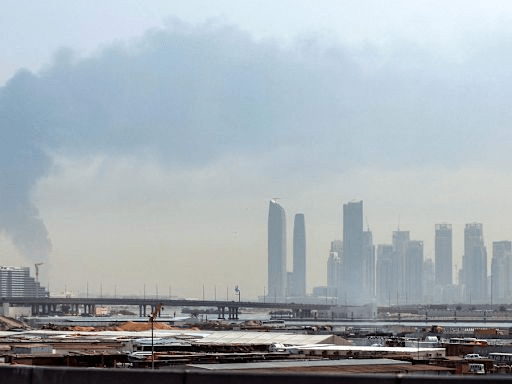
The editorial examines the broader consequences of the war on Iran, focusing on how the conflict has destabilised not only Iran but also the Gulf region. It highlights the collapse of the Gulf’s long-standing image as a stable hub of prosperity and its implications for the global economy, including India.
Core Issue
The central issue is the erosion of the Gulf’s perceived stability due to the Iran conflict, leading to:
- Economic disruptions across energy and trade systems
- Loss of investor confidence and regional credibility
- Increased geopolitical and security uncertainty
This raises a key question:
How will the destabilisation of the Gulf region reshape global economic and geopolitical dynamics?
Impact on Iran
- Widespread destruction of infrastructure and industrial capacity
- Breakdown of governance structures and institutions
- Severe human cost including displacement and social fragmentation
Outcome:
- Iran emerges as a weakened but resilient state with uncertain political trajectory
Economic Shockwaves Beyond Iran
- Collapse of Iranian oil exports affecting global energy markets
- Rise in fuel prices and supply chain disruptions
- Shortages in LPG and LNG impacting industries globally
Implication:
- The conflict has triggered a ripple effect across global economies
The Gulf’s Illusion of Stability
- The Gulf region long projected itself as a secure hub for:
- Capital and investment
- Trade and logistics
- Migrant labour
- The war has exposed underlying vulnerabilities
Observation:
- Stability in the Gulf was dependent on external security guarantees and geopolitical balance
Vulnerability of the Gulf Economy
- Investor confidence has declined
- Trade routes and logistics hubs (e.g., Dubai) face disruptions
- Insurance costs and delays in shipping have increased
Impact on India:
- Indian exporters face delays and higher costs
- Migrant workers face uncertainty and job insecurity
- Remittance flows may be affected
Psychological and Strategic Impact
- Perception of the Gulf as a “safe haven” has been shattered
- Businesses and investors are reassessing long-term commitments
- Regional economies face slowdown due to uncertainty
Key insight:
- Confidence, not just infrastructure, sustains economic hubs
Future of Iran
- Iran likely to survive but in a weakened state
- Possibility of:
- Internal repression
- Economic instability
- Continued regional influence through asymmetric means
Risk:
- Potential for prolonged instability and conflict
Regional Geopolitical Shifts
- Increased risk of instability spreading across West Asia
- Gulf states reconsidering dependence on external powers
- Possibility of new regional alignments
Observation:
- The region is at a geopolitical crossroads
Possibility of Renewal
- Opportunity for regional cooperation and reconstruction
- Shared interest in preventing further instability
- Potential for rebuilding trust and economic systems
Challenge:
- Overcoming mistrust and geopolitical rivalries
Implications for India
- Economic risks due to energy dependence and trade linkages
- Strategic need to balance relations with Gulf countries and Iran
- Opportunity to act as a bridge in regional cooperation
Way Forward
- Promote regional dialogue and conflict resolution
- Strengthen global energy security mechanisms
- Diversify energy sources and trade routes
- Encourage cooperative frameworks in West Asia
- Build resilience in global supply chains
Conclusion
The war on Iran has shattered long-held assumptions about the Gulf’s stability and resilience.
The region now faces a critical choice between prolonged instability and cooperative recovery.
For the global economy, including India, the lesson is clear: prosperity built on fragile geopolitical foundations cannot endure without stability and collective security.