


The Hindu Editorial Analysis
20 May 2026
A China-U.S. summit that drew global attention
(Source – The Hindu, International Edition – Page No. – 8)
Topic : GS Paper: GS-2 (International Relations) and GS-3 (Global Geopolitics)
Context
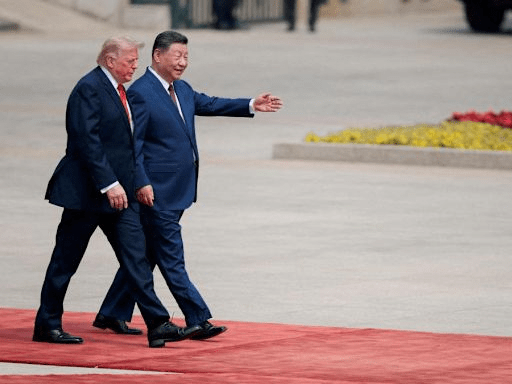
The editorial discusses the renewed China–U.S. summit after a prolonged hiatus and examines its implications for global politics, bilateral relations, and the broader Asian strategic landscape. It argues that amid rising global instability, engagement between the two major powers carries significance beyond bilateral diplomacy.
Core Issue
The central issue is the attempt by China and the United States to stabilise relations despite strategic rivalry, focusing on:
- Economic and technological interdependence
- Managing geopolitical competition
- Sensitive issues such as Taiwan
- Broader global stability concerns
This raises a key question:
Can cooperation between major powers coexist with strategic competition in an increasingly multipolar world?
Why the Summit Drew Global Attention
The summit attracted worldwide attention because:
- Global politics is experiencing heightened instability
- U.S.–China relations influence global markets and security
- Stable ties between major powers have worldwide consequences
Observation:
- In periods of uncertainty, major-power engagement becomes strategically significant.
The editorial compares the event with:
- The Nixon–Mao meeting of 1972, which transformed Cold War geopolitics.
A New Vision for China–U.S. Relations
According to the editorial, leaders agreed on:
- Building stable and constructive relations
- Providing long-term strategic guidance
- Expanding areas of cooperation despite differences
Implication:
- The objective is managing competition rather than eliminating it.
Economic and Trade Cooperation
Economic cooperation is described as the foundation of relations.
Areas highlighted:
- Market access discussions
- Agricultural trade
- Reciprocal tariff adjustments
- Strengthening bilateral trade mechanisms
Significance:
- Economic interdependence remains a stabilising factor.
Observation:
- Trade relations continue to act as a “ballast” during periods of political tension.
Technology and Artificial Intelligence Cooperation
Focus areas include:
- Semiconductor and technology engagement
- Artificial Intelligence cooperation
- Innovation partnerships
Key concern:
- Complete decoupling of supply chains appears impractical.
Implication:
- Technology competition increasingly coexists with selective cooperation.
People-to-People Exchanges
The summit stressed:
- Educational exchanges
- Youth interaction programmes
- Cultural cooperation
Observation:
- Societal engagement can provide long-term stability beyond state-level diplomacy.
The Taiwan Question: The Core Sensitivity
Taiwan remains the most critical issue.
China’s position:
- Opposition to Taiwan independence
- Emphasis on cross-strait stability
Concern:
- Any mismanagement of Taiwan may destabilise broader relations.
Observation:
- Taiwan continues to function as the principal strategic red line.
Implications for India and Asia
Some analysts worry that improved China–U.S. relations could reduce India’s diplomatic space.
The editorial argues:
- India’s strategic trajectory rests on its own capabilities and partnerships
- Stable China–U.S. relations may contribute to wider regional stability
Potential benefits:
- Reduced geopolitical volatility
- Improved economic environment for Asia
Broader Lessons for Global Order
The summit highlights:
- Need for coexistence among major powers
- Importance of managing rivalry peacefully
- Recognition that global problems require coordinated approaches
Observation:
- Future international stability increasingly depends on balancing competition with cooperation.
Challenges
Major obstacles remain:
- Strategic distrust
- Trade and technology disputes
- Taiwan tensions
- Differing geopolitical visions
Concern:
- Diplomatic engagement alone cannot eliminate structural rivalry.
Way Forward
- Strengthen institutional dialogue mechanisms
- Expand economic and technological cooperation
- Preserve strategic communication channels
- Encourage people-to-people engagement
- Manage disputes through diplomatic frameworks rather than escalation
Conclusion
The China–U.S. summit reflects the reality that strategic competition and cooperation must increasingly coexist in a changing world order.
While structural tensions remain unresolved, sustained dialogue between major powers can reduce uncertainty and contribute to global stability.
For countries like India and the wider world, the ability of major powers to manage differences peacefully remains of critical importance.