


The Hindu Editorial Analysis
15 January 2026
The continued custody in Delhi Riots cases, an injustice
(Source – The Hindu, International Edition – Page No. – 8)
Topic : GS Paper – GS-2 : Fundamental Rights, Judiciary, Criminal Justice System, Civil Liberties
Context
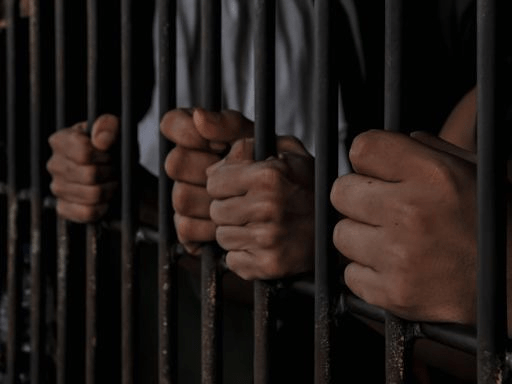
The Supreme Court’s order dated January 5, 2026, in the Delhi Riots “larger conspiracy” case has once again brought into sharp focus the fragile state of personal liberty in India’s criminal justice system. While the Court granted bail to five accused persons, it denied bail to Umar Khalid and Sharjeel Imam, despite both having spent over five years in custody without the commencement of trial. The editorial questions whether prolonged incarceration without trial can be reconciled with constitutional guarantees under Article 21.
Core Issue
The central issue is whether continued imprisonment without trial, based on expansive interpretations of anti-terror laws, amounts to a violation of personal liberty.
The case raises fundamental concerns about:
- The right to a speedy trial,
- The interpretation of “terrorism” under the UAPA,
- The judiciary’s duty to scrutinise prosecution claims rather than defer to them.
Prolonged Custody and Article 21
Article 21 of the Constitution guarantees the right to life and personal liberty, which judicial precedent has repeatedly interpreted to include the right to a speedy trial.
The Supreme Court itself has acknowledged that:
- If the State cannot ensure a trial within a reasonable period, it cannot justifiably oppose bail.
- In this case, the accused have remained incarcerated for over five years, while the trial has not even commenced.
The sheer scale of the prosecution — involving hundreds of witnesses — makes the prospect of a timely conclusion implausible, raising the risk of indefinite incarceration without adjudication of guilt.
Unconvincing Reasoning in Bail Denial
The Court distinguished Umar Khalid and Sharjeel Imam from other accused on the ground that they were alleged to have “conceptualised” or “orchestrated” the riots.
This reasoning is problematic because:
- At the bail stage, accusations remain untested allegations.
- The right to liberty cannot be made contingent on the gravity of claims alone, especially when no trial has begun.
- Individuals do not lose their right to a speedy trial merely because the State labels them as principal conspirators.
Delays in trial cannot be attributed to accused persons, who have no control over courtroom schedules or prosecutorial pace.
Expansive Interpretation of UAPA
Section 15 of the UAPA defines terrorism and includes the phrase “by any other means,” which the Court interpreted broadly to include acts such as protest-related chakka jams.
This interpretation raises serious concerns:
- Criminal law traditionally requires narrow interpretation to prevent state overreach.
- Broad readings of vague phrases expand prosecutorial discretion and dilute safeguards against misuse.
- Acts of protest, even disruptive ones, risk being subsumed under anti-terror provisions without clear evidence of violence or intent to terrorise.
Such interpretive expansion strengthens the coercive power of the State at the cost of individual liberty.
Bail, “Prima Facie” Standard, and Colonial Legacy
Under Section 43D(5) of the UAPA, bail can be denied if the court believes there is a prima facie case against the accused.
The problem lies in:
- The elasticity of what constitutes a prima facie case,
- Courts relying heavily on prosecution narratives rather than tested evidence,
- The colonial origins of such provisions, historically used to suppress political dissent.
By widening the scope of Section 15, denial of bail becomes almost automatic, transforming pre-trial detention into a punitive measure.
Need for Scrutiny, Not Deference
The editorial argues that the Court’s approach shows excessive deference to the prosecution.
Key concerns include:
- Evidence on record primarily indicates organisation or facilitation of protests, not terrorist acts.
- The prosecution’s claim of a larger conspiracy is treated as plausible without rigorous examination.
- Courts must distinguish between examining possible defences and uncritically accepting prosecutorial inferences.
When liberty hangs in the balance after years of incarceration, judicial scrutiny must be exacting, not deferential.
Historical Lessons on “Conspiracy”
History shows that conspiracy charges are often used to compensate for the absence of direct evidence. From the Dreyfus Affair to modern political trials, such allegations have justified prolonged imprisonment without proof.
The editorial cautions that:
- Allegations of conspiracy demand greater scrutiny, not relaxed standards.
- Absence of direct evidence should not legitimise endless incarceration.
- Protest and dissent must not be blurred with violence or terrorism.
Conclusion
The continued imprisonment of Umar Khalid and Sharjeel Imam without trial represents a grave injustice. It undermines the constitutional promise that liberty cannot be sacrificed to mere suspicion or prosecutorial convenience.
If prolonged custody without trial becomes acceptable, the right to liberty risks becoming illusory. The judiciary’s role is not merely to manage national security concerns, but to act as the ultimate guardian of constitutional freedoms. Denial of bail in such circumstances is not just a legal error — it is a constitutional failure that must be corrected.