


The Hindu Editorial Analysis
29 January 2026
India, the beautiful — but first, India the functional
(Source – The Hindu, International Edition, Page no.-8 )
Topic: GS Paper – GS 2 & GS 3 : Tourism Governance, Infrastructure, Economic Development, Image & Soft Power
Context
India is globally celebrated for its civilisational depth, natural diversity, and cultural richness. Yet, despite this unparalleled advantage, India attracted only 5.6 million foreign tourists by August 2025, a modest figure when compared to regional peers such as Thailand and Singapore. The editorial argues that India’s tourism problem is not one of potential, but of functionality.
Tourism today is not merely about beauty or heritage; it is about experience, safety, efficiency, and trust. Until India fixes its fundamentals, it will remain an idea admired from afar rather than a destination chosen to stay.
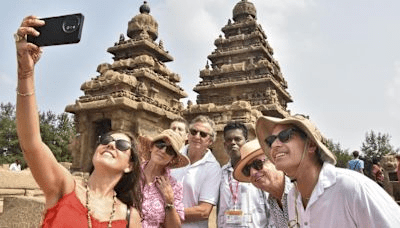
The Tourism Paradox
India offers:
- Snow-capped mountains and sun-soaked beaches
- Ancient temples and spiritual retreats
- Wildlife parks and vibrant urban culture
Yet tourism earnings and arrivals remain disproportionately low. This gap reflects a structural failure, not a branding failure. Numbers alone expose the malaise:
- Thailand earns over $60 billion annually from tourism
- India earns barely one-third of that, despite far greater diversity
Tourism strategy must therefore shift from showcasing beauty to delivering reliability.
Three Core Problems: The Three ‘I’s
India’s tourism challenge can be reduced to three interlinked deficits:
1. Image
Branding campaigns like “Incredible India” are evocative, but insufficient. Global perception is shaped more by:
- Safety concerns, especially for women
- Scams, harassment, sanitation gaps
- Bureaucratic friction
Tourists seek welcome, predictability, and reassurance, not moral victory in a cultural war. Countries like Thailand and Singapore succeed because they are consistently perceived as safe, efficient, and tourist-friendly.
2. Infrastructure
Tourist experience begins at arrival:
- Airports, immigration queues, taxis, signage, Wi-Fi
- Road quality, last-mile connectivity, clean public toilets
Luxury hotels cannot compensate for potholes, poor signage, or unreliable internet. Remote and heritage destinations still suffer from poor access. Infrastructure must be functional, clean, and dependable, not just aspirational.
3. “India itself” (Experience Deficit)
The final barrier is experiential:
- Overcrowding, noise, unpredictability
- Lack of trained service staff
- Weak professional tourism culture
Scammers, touts, and harassment erode trust. India reportedly faces a 40% shortfall in trained hospitality staff, while graduates prefer predictable office jobs over service roles. Tourism must be treated as a profession, not a fallback.
Fixing the Deficit: A Multi-Pronged Strategy
Rebranding with Precision
India must move beyond one-size-fits-all messaging. Tourism should be segmented:
- Spiritual India
- Adventure India
- Luxury India
Well-defined circuits (Golden Triangle, Himalayan trail, coastal belt) should be marketed with clarity. The goal is not “Incredible India”, but “Incredible Indias”, each tailored to a specific audience.
Infrastructure That Matches Ambition
- Public–private partnerships for heritage conservation
- Nationwide “Clean Tourism” mission (toilets, signage, waste management)
- Improved roads, rail, and sustainable transport to lesser-known destinations
- Digitisation of museums and heritage spaces
Immigration and Visa Reforms
While e-visas have helped, India still lags behind Asian peers in ease of entry.
- Faster, simpler visa processing
- Long-term multi-entry visas for frequent travellers
- Friendlier immigration personnel
India must project confidence — absorbing criticism without hostility and training immigration officers to be welcoming rather than suspicious.
Safety, Skills, and Trust
- Expand tourist police forces, especially with women officers
- Multilingual support systems
- Crackdown on scams and harassment
- Centralised verified guide and transport apps
Skill development must extend beyond luxury hotels to homestays, eco-lodges, and local artisans.
Sustainable and Authentic Tourism
Modern tourists seek meaning:
- Eco-tourism and community-based tourism
- Regulated footfalls at fragile sites
- Cultural preservation alongside economic growth
Tourism growth must not come at the cost of environmental or cultural degradation.
Tourism as an Economic and Strategic Imperative
Tourism generates:
- More employment per rupee than manufacturing
- Jobs for the unskilled and semi-skilled
- Regional balance and social mobility
In regions with high youth unemployment, tourism can prevent social unrest. It is not merely an economic sector but a strategic stabiliser.
However, policy contradictions persist. Despite GST reforms, the hospitality sector suffers from:
- Denial of input tax credits
- Higher effective taxation than before
This undermines India’s competitiveness as a global destination and must be corrected.
Conclusion
India does not need reinvention — it needs refinement. It already possesses:
- Egypt’s history
- New Zealand’s landscapes
- A continent’s cultural depth
But until India fixes the fundamentals of image, infrastructure, and experience, it will remain a beautiful promise rather than a preferred destination.
To become a top-tier tourism power, India must first become India the functional — safe, efficient, welcoming, and reliable. The world is ready. India must now be ready to host it — not just to visit, but to stay.