


The Hindu Editorial Analysis
13 February 2026
Vande Mataram, its six stanzas and a settled question
(Source – The Hindu, International Edition, Page no.-10 )
Topic: GS Paper 2 – Indian Constitution & Governance
Context
The Union Ministry of Home Affairs (MHA), through a January 28, 2026 order, directed that all six stanzas of Vande Mataram be played at official functions, with everyone present required to stand at attention. The move has reignited debate over constitutional secularism, freedom of conscience, and the settled position adopted by the Constituent Assembly in 1937 and reaffirmed by the Supreme Court in Bijoe Emmanuel v. State of Kerala (1986).
The issue is not about the respect owed to Vande Mataram, but whether the State can compel participation in its full version.
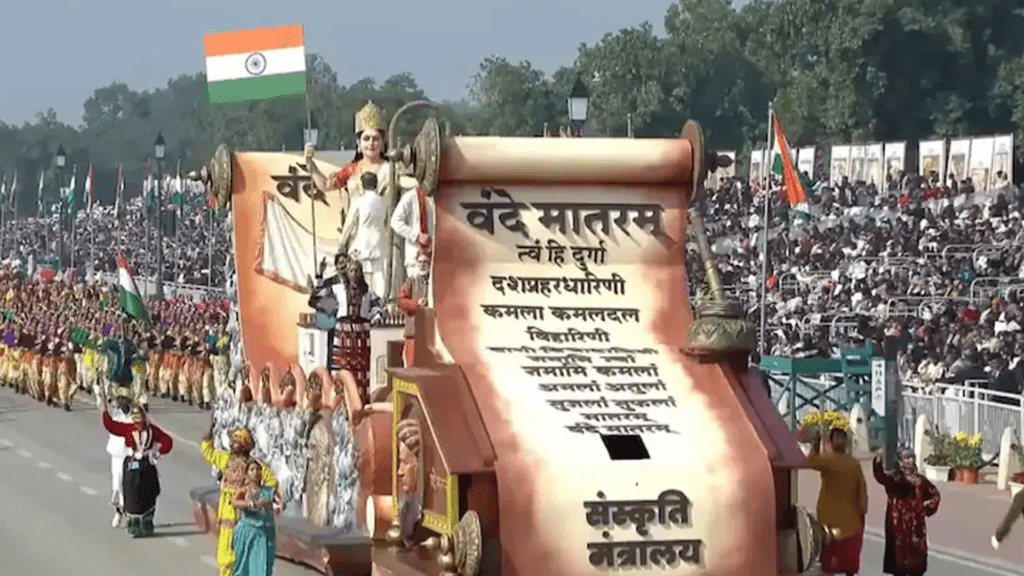
Historical Settlement: 1937 Decision
In October 1937, the Congress Working Committee examined objections raised by sections of Muslim representatives regarding certain stanzas of Vande Mataram.
Key decisions:
- The first two stanzas alone would be used at national gatherings.
- The remaining stanzas, which invoke Hindu deities such as Durga, Lakshmi and Saraswati, would not be part of official usage.
- The resolution was unanimous and reflected collective wisdom, not appeasement.
Even Rabindranath Tagore supported limiting official usage to the first two stanzas, recognising the need to preserve unity in a diverse society.
On January 24, 1950:
- Jana Gana Mana was adopted as the National Anthem.
- Vande Mataram was to be “honoured equally”.
- However, only the first two stanzas were constitutionally accepted for official purposes.
This was a deliberate constitutional choice, not an omission.
Constitutional Framework
- Article 51A(a) (Fundamental Duty)
- Requires citizens to respect the National Flag and the National Anthem.
- Vande Mataram is not mentioned.
- Prevention of Insults to National Honour Act, 1971
- Protects the National Anthem and Flag.
- Does not cover Vande Mataram.
- Article 19(1)(a)
- Guarantees freedom of speech, which includes the right to remain silent.
- Article 25
- Protects freedom of conscience and the right to freely profess and practice religion.
Thus, there is no legal compulsion to sing Vande Mataram.
The Supreme Court’s Settled Position
In Bijoe Emmanuel v. State of Kerala (1986):
- Three Jehovah’s Witness children stood respectfully but did not sing the National Anthem.
- They were expelled from school.
- The Supreme Court held that expulsion violated Articles 19 and 25.
Justice O. Chinnappa Reddy held:
- Standing respectfully is sufficient.
- Refusal to sing does not amount to disrespect.
- Freedom of conscience cannot be overridden by majoritarian sentiment.
The Court cited West Virginia State Board of Education v. Barnette (1943):
No official can prescribe what shall be orthodox in matters of opinion or religion.
If citizens cannot be forced to sing even the National Anthem, compelling participation in a religiously loaded version of Vande Mataram becomes constitutionally untenable.
The Core Constitutional Question
The real issue is:
Can the State compel participation in a song containing explicit religious imagery by invoking patriotism?
The later stanzas of Vande Mataram include devotional references to Durga and other deities. For many citizens, particularly minorities, being compelled to participate in such verses may conflict with conscience and faith.
Patriotism in a constitutional democracy cannot be equated with enforced religious expression.
Secularism and Constitutional Morality
India’s secularism is not hostility to religion, but equal respect for all faiths.
The 1937 compromise recognised:
- The need to preserve unity.
- The difference between cultural reverence and constitutional enforceability.
- That nationalism must not override conscience.
Forcing participation risks:
- Diluting Article 25 protections.
- Ignoring constitutional morality.
- Turning a symbol of unity into a site of exclusion.
What This Is Really About
No one disputes the historic importance of Vande Mataram in India’s freedom struggle.
The question is whether:
- Patriotism can be mandated.
- Conscience can be overridden.
- Executive orders can bypass settled constitutional positions without legislative amendment or judicial approval.
The Supreme Court’s jurisprudence makes clear:
Respect cannot be compelled beyond constitutional limits.
Conclusion
The 1937 settlement was not weakness but constitutional wisdom. It balanced national sentiment with pluralism. The Supreme Court in Bijoe Emmanuel affirmed that standing respectfully is sufficient and that silence is protected speech.
Compelling the full six-stanza version of Vande Mataram risks violating Articles 19 and 25 and undermining India’s secular constitutional framework.
In a republic founded on liberty of thought and belief, patriotism must remain voluntary, not coerced. The Constitution does not demand uniform worship — it demands equal citizenship.