


The Hindu Editorial Analysis
16 March 2026
Building India’s climate resilience with water at the core
(Source – The Hindu, International Edition, Page no.-10 )
Topic: GS Paper 3 – Environment, Climate Change & Water Resources
Introduction
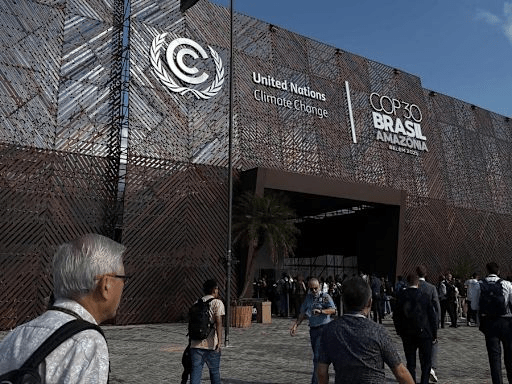
Climate change is increasingly being experienced through water-related disruptions such as floods, droughts, glacier melt and salinity intrusion. Recognising this, the global climate agenda is shifting towards measurable adaptation strategies, with water management emerging as a core component. The outcomes of COP30 in Belém emphasised water governance as central to climate resilience, highlighting the need for integrated water, sanitation and hygiene (WASH) systems.
I. Climate Change Impacts Through Water
Water systems represent the most visible pathway through which climate change affects societies.
Major impacts include:
- Floods that submerge cities and infrastructure.
- Droughts that disrupt agricultural production and rural economies.
- Glacial melt affecting Himalayan river systems.
- Salinity intrusion contaminating coastal aquifers.
- Erratic monsoons affecting food security.
Agriculture plays a key role in this context, accounting for nearly 40% of anthropogenic methane emissions, largely through rice cultivation, livestock and organic waste.
Therefore, improving water use efficiency, wastewater reuse, aquifer recharge and sanitation systems becomes critical for climate resilience.
II. Global Adaptation Framework and Belém Indicators
The global climate governance system is increasingly adopting measurable indicators for adaptation.
The Belém Adaptation Indicators, under the UAE Framework for Global Climate Resilience, aim to strengthen accountability in climate adaptation.
Two major focus areas include:
1. Climate-Resilient Water Systems
This involves:
- Reducing climate-induced water scarcity.
- Improving resilience against floods and droughts.
- Ensuring universal access to safe drinking water.
- Strengthening sanitation infrastructure.
2. Risk Governance
This includes:
- Universal multi-hazard early warning systems by 2027.
- Strengthening hydrometeorological services.
- Updating national vulnerability assessments.
These indicators provide a framework for countries to integrate water systems into climate adaptation planning.
III. India’s Progress in Water Governance
India has already initiated several reforms aimed at improving water governance.
1. Institutional Integration
Water governance was consolidated under the Ministry of Jal Shakti in 2019, promoting integrated water resource management.
2. Water Vision 2047
India’s long-term water strategy emphasises:
- Sustainability
- Equity in water distribution
- Climate resilience
3. Groundwater Management
The National Aquifer Mapping and Management Programme (NAQUIM) has shifted focus from mapping aquifers to implementing aquifer-level management plans.
This integrates hydrogeological knowledge with policy implementation.
4. River Rejuvenation
The National Mission for Clean Ganga (NMCG) has expanded beyond sewage treatment to include:
- Biodiversity conservation
- Digital monitoring
- International cooperation
Such initiatives strengthen ecosystem resilience against climate variability.
IV. Key Challenges in Climate Resilience
Despite progress, several structural challenges remain.
1. Persistent Water Scarcity
Water availability remains unevenly distributed across regions.
Climate disasters in India are largely water-related, making reliable water infrastructure essential.
Adaptation strategies require:
- Climate stress testing of infrastructure
- Diversification of water sources
- Redundant and resilient service delivery systems
2. Adaptation Finance Constraints
Global climate discussions propose mobilising $1.3 trillion annually by 2035 for adaptation.
However, funding mechanisms remain uncertain.
Without predictable financial flows:
- Disaster recovery will crowd out long-term planning.
- Water infrastructure projects may remain underfunded.
Therefore, water projects must be explicitly classified as climate investments.
3. Digital Fragmentation
Although India possesses extensive hydrological and meteorological data, integration remains limited.
Artificial Intelligence-driven real-time decision systems are not fully embedded into:
- Planning processes
- Budgeting systems
- Local governance structures
Integrated digital platforms could combine:
- Hydrological data
- Crop advisories
- Insurance systems
- Financial flows
This would support real-time climate decision-making.
V. India’s Opportunity in Global Climate Leadership
India has the institutional foundations and technological capacity to lead in climate adaptation.
Existing domestic missions already address many global adaptation targets, including:
- Drinking water expansion
- Sanitation programmes
- Irrigation efficiency
- Urban water reforms
India’s digital public infrastructure also offers opportunities for integrated climate governance.
By aligning national policies with global adaptation indicators, India could set an example for the Global South.
Conclusion
Water lies at the heart of climate resilience, linking ecosystems, agriculture and human settlements. For India, strengthening water governance systems offers a practical pathway to climate adaptation. By integrating technology, finance and community participation into water management, India can transform adaptation from a policy aspiration into measurable resilience and potentially emerge as a global leader in climate action.