


The Hindu Editorial Analysis
01 April 2026
The West Asia cauldron of conflict and its fallout
(Source – The Hindu, International Edition, Page no.-10 )
Topic : GS Paper: GS-2 (International Relations) and GS-3 (Internal Security, Energy Security)
Context
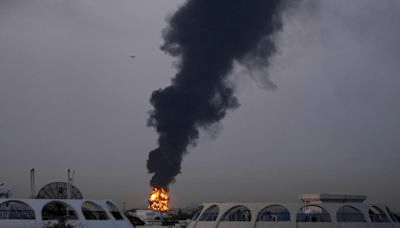
The editorial examines the escalating conflict in West Asia, primarily involving Israel, Iran, and the United States. It highlights the transformation of a limited confrontation into a potentially prolonged regional conflict, with significant geopolitical, economic, and security implications for the world.
Core Issue
The central issue is the intensification of conflict in West Asia, driven by:
- Israel’s aggressive military strategy against Iran
- Direct involvement and support from the United States
- Iran’s resilience and counter-strategy
This raises a critical question:
Will the conflict remain contained, or evolve into a prolonged and destabilising regional war with global consequences?
Nature and Escalation of the Conflict
- The conflict has moved from limited confrontation to sustained military engagement
- Joint U.S.-Israel operations have targeted Iran extensively
- Civilian casualties and infrastructural destruction are rising
Observation:
- The conflict reflects a shift from deterrence to escalation, increasing the likelihood of a prolonged war
Iran’s Strategic Response
- Despite leadership losses and attacks, Iran has maintained strategic resilience
- Its nuclear assets remain largely intact
- Iran is capable of escalating through:
- Blocking the Strait of Hormuz
- Targeting global oil supply chains
- Expanding regional conflict
Implication:
- Iran is not a weakened actor; it retains the capacity to prolong and intensify the conflict
Limits of Military Superiority
- U.S. and Israeli technological superiority does not guarantee decisive victory
- Air power alone cannot secure strategic outcomes
- Iran is better positioned for a war of attrition
Key insight:
- Modern conflicts are increasingly prolonged, where endurance matters more than initial superiority
Geopolitical Dimensions
- The conflict risks expanding across West Asia, including Lebanon, Iraq, and Syria
- China and Russia are likely to oppose escalation
- Europe and other economies lack capacity or willingness to engage
Global concern:
- Weak international response indicates erosion of collective security mechanisms
Economic and Energy Implications
- Threat to the Strait of Hormuz, through which a major share of global oil passes
- Rising energy prices and disruption of global supply chains
- Economic strain on both developed and developing countries
Result:
- The conflict has the potential to trigger global economic instability
Ideological and Sectarian Dimensions
- The conflict is not purely geopolitical but also ideological
Shia resistance:
- Rooted in historical narratives such as Karbala
- Emphasises resistance, sacrifice, and endurance
Implication:
- External aggression may strengthen internal cohesion and resistance in Iran
Strategic Miscalculations
- Israel’s objective of regime change in Iran appears unrealistic
- U.S. support may deepen rather than resolve the conflict
- Underestimation of Iran’s resilience could prolong war
Observation:
- The conflict reflects a breakdown of strategic restraint
Risks of Prolonged Conflict
- Transition to a “no peace, no war” situation
- Weaponisation of global economic systems (energy, shipping)
- Increased militarisation across the region
Global risk:
- Possibility of a wider international conflict if escalation continues unchecked
Way Forward
- Immediate diplomatic engagement to de-escalate tensions
- Restoration of multilateral dialogue mechanisms
- Avoidance of provocative military actions
- Recognition of regional complexities and limits of military solutions
- Focus on stability of global energy and trade systems
Conclusion
The West Asia conflict represents a dangerous convergence of military, geopolitical, and ideological tensions.
A prolonged war would not only destabilise the region but also disrupt the global economy and security architecture.
Strategic restraint, diplomacy, and multilateral cooperation are essential to prevent escalation into a larger global crisis.