


The Hindu Editorial Analysis
06 April 2026
Why did Iran war not affect China’s energy security so far?
(Source – The Hindu, International Edition, Page no.-10 )
Topic : GS2 : International Relations
Why in news:– India faces fuel shortages amid West Asian tensions, while China remains stable. This contrast highlights China’s energy security strategies, diversification, and reduced dependence on vulnerable global oil supply routes.
Key Details
- Strategic reserves: China maintains ~120 days of oil storage, cushioning supply shocks.
- Diversified imports: Pipelines from Russia and Central Asia reduce reliance on sea routes.
- Energy transition: Strong push for renewables and EVs lowers oil dependence.
- Industrial slowdown: Reduced economic activity decreases overall energy demand.
- Geopolitical strategy: Long-term planning and global sourcing ensure energy security.
Context: Energy Crisis and China’s Relative Stability
- Ongoing Israel–US–Iran tensions have disrupted global energy supplies.
- India faced LPG shortages and panic buying of petrol/diesel.
- Despite having a larger economy and demand, China has not faced similar disruptions.
- This resilience stems from long-term planning, geography, diversification, and policy strategies.
Addressing the Malacca Dilemma
- China earlier depended heavily on the Strait of Malacca for oil imports, creating vulnerability.
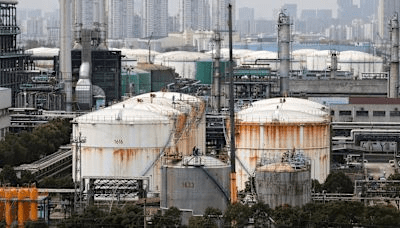
- It built large Strategic Petroleum Reserves (SPR) to ensure energy security.
- Currently holds ~120 days of oil reserves, allowing short-term insulation from supply shocks.
- Diversified imports reduce reliance on critical chokepoints like the Strait of Hormuz.
Pipeline Diplomacy and Diversification
- Developed oil and gas pipelines with Central Asia and Russia.
- Around 20% of crude imports now come through pipelines.
- Imports ~900,000 barrels/day from Russia.
- Compared to stalled projects like IPI and TAPI pipelines, China succeeded due to:
- Stronger financial capacity
- Stable regional diplomacy
- Major firms like Sinopec, CNPC, and CNOOC ensured diversified sourcing (e.g., Sudan, Angola).
Climate Diplomacy and Energy Transition
- Formed the BASIC bloc (Brazil, South Africa, India, China) to protect developing nations’ carbon space.
- Engaged with the US via the 2008 Energy and Environment Framework Agreement.
- This led to technology transfer and cooperation, aiding:
- Renewable energy (solar, wind, tidal)
- Energy efficiency systems
- Carbon capture and storage
- Electric mobility development
- Played a major role in shaping the Paris Climate Accord.
Managing Coal Dependence and Pollution
- China remains the largest coal consumer globally, drawing criticism.
- Simultaneously implemented energy transition policies.
- Tackled severe urban air pollution (e.g., Beijing) through:
- Time-bound targets
- Policy reforms and institutional restructuring
- Balanced industrial growth with environmental measures.
Role of Electric Vehicles (EVs)
- China is the largest EV market in the world.
- Government policies include:
- Tax incentives
- Purchase mandates
- Preferential licensing (lottery advantages)
- Large consumer base + scaling capability boosted adoption.
- Result: Reduced oil import demand, especially noticeable by 2025.
Impact of Economic Slowdown
- China is currently facing economic slowdown.
- Growth target for 2026 is ~4.5%.
- Key sectors like:
- Construction
- Cement
- Iron & steel are underperforming.
- Reduced industrial activity → lower energy demand.
- Gradual shift from being the “world’s factory” also reduces consumption.
Conclusion: Why China Remains Resilient
- China’s stability is due to a combination of:
- Strategic reserves and diversification
- Pipeline infrastructure and diplomacy
- Energy transition and EV adoption
- Economic slowdown reducing demand
- Long-term proactive planning + geopolitical strategy has helped China withstand the current crisis better than many countries.
EXPECTED QUESTION FOR PRELIMS:
Q. Which principle is followed by the Paris Agreement?
- Polluter Pays Principle
- Absolute Equality Principle
- Common But Differentiated Responsibilities
- Precautionary Principle
Answer: c