


The Hindu Editorial Analysis
15 May 2026
The Iran war, India’s strategic autonomy challenges
(Source – The Hindu, International Edition – Page No. – 8)
Topic : GS Paper: GS-2 (International Relations) and GS-3 (Energy Security, External Sector, Strategic Affairs)
Context
The editorial examines how the ongoing Iran crisis and the broader geopolitical turmoil in West Asia have posed significant challenges to India’s strategic autonomy. It argues that the conflict is testing India’s ability to balance competing partnerships while safeguarding its economic and geopolitical interests.
Core Issue
The central issue is the growing difficulty India faces in preserving strategic autonomy amid increasing global polarisation and geopolitical pressure, particularly due to:
- U.S. demands for strategic alignment
- Energy and maritime vulnerabilities linked to Iran
- Emerging European and American strategic calculations
This raises a key question:
Can India continue its policy of multi-alignment and strategic autonomy in an increasingly fragmented global order?
Why Iran Matters for India
India’s long-standing stakes in Iran include:
- Energy security
- Access to West and Central Asia
- Strategic connectivity through Chabahar Port
- Geopolitical balancing space
Importance:
- Iran provides India a gateway to Afghanistan and Eurasia while bypassing Pakistan.
Implication:
- Regional instability directly affects India’s strategic and economic interests.
Strategic Autonomy Under Stress
India traditionally pursued:
- Independent foreign policy choices
- Multi-alignment rather than formal alliances
- Simultaneous engagement with competing powers
Examples:
- Relations with the U.S.
- Strategic ties with Russia
- Cooperation with Iran
- Expanding Indo-Pacific partnerships
Observation:
- Strategic autonomy historically depended on flexibility rather than bloc politics.
Changing Nature of U.S. Pressure
The editorial argues that recent U.S. actions reflect:
- Increased use of economic coercion
- Demands for strategic conformity
- Greater linkage between economic and geopolitical interests
Examples:
- Pressure on Russian oil imports
- Opposition to de-dollarisation efforts
- Demands regarding Iran-related engagement
Concern:
- Economic interdependence increasingly creates geopolitical vulnerability.
Limits of India–Europe Partnerships
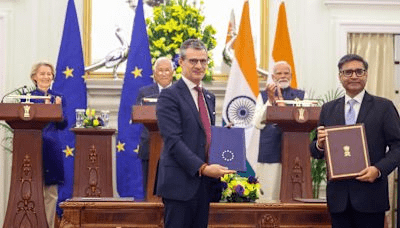
Recent developments include:
- India–EU Free Trade Agreement progress
- Rafale fighter aircraft purchase from France
Initial expectation:
- Stronger Europe ties would diversify India’s strategic options.
However:
- Europe may align with U.S. positions during crises.
Implication:
- Diversification of partners may not always ensure independent strategic space.
Challenges in Defence and Technology Dependence
Concerns raised include:
- Technology transfer limitations
- Dependence on foreign upgrades and systems
- Constraints on domestic manufacturing ambitions
Key issue:
- Excessive reliance on imported defence technology may weaken long-term strategic autonomy.
Energy Security and Economic Risks
Effects of the Iran conflict include:
- Oil market disruptions
- Supply chain uncertainty
- Maritime security concerns in the Indian Ocean region
Result:
- India faces inflationary pressures and economic vulnerabilities.
Observation:
- Strategic autonomy increasingly intersects with economic resilience.
The Emerging Global Order
The editorial suggests:
- U.S.-led liberal order is under stress
- Europe may increasingly align with American strategic interests
- Multipolarity may remain uneven and contested
Concern:
- The Global South could face increased pressure from competing geopolitical blocs.
Challenges Before India
Key difficulties include:
- Balancing ties with U.S., Russia, Iran, and Europe simultaneously
- Preserving policy independence amid coercive pressures
- Reducing strategic vulnerabilities in energy and defence sectors
Observation:
- Strategic autonomy now requires economic and technological self-reliance in addition to diplomatic flexibility.
Way Forward
- Diversify energy sources and supply routes
- Strengthen domestic defence manufacturing under Atmanirbhar Bharat
- Reduce critical technology dependence
- Expand strategic partnerships without alliance commitments
- Build stronger economic resilience and alternative connectivity corridors
Conclusion
The Iran crisis represents more than a regional conflict; it is a test of India’s strategic doctrine in an era of geopolitical turbulence.
As global alignments become more fluid and coercive pressures intensify, preserving strategic autonomy will require not only diplomatic balancing but also greater economic and technological self-strengthening.
India’s future role in a multipolar world will depend on its ability to maintain independence without isolation.