


The Hindu Editorial
09 June 2026
A troubling judgment and endorsement of the SIR
(Source – The Hindu, Editorial Page no. – 8)
Topic: GS-2 (Polity & Governance), GS-2 (Election Commission), GS-2 (Constitutional Bodies)
Context
The editorial critiques the Supreme Court’s May 27, 2026 judgment upholding the Special Intensive Revision (SIR) of electoral rolls conducted by the Election Commission of India (ECI). It argues that the verdict raises important constitutional, legal, and democratic concerns regarding electoral roll revision and citizenship verification.
Core Argument
The editorial contends that the Supreme Court’s endorsement of the SIR grants excessive discretion to the Election Commission and may dilute statutory safeguards governing electoral roll revisions, potentially affecting citizens’ voting rights.
Constitutional Basis of Electoral Rolls
Relevant Constitutional Provisions
Article 324
• Vests superintendence, direction, and control of elections in the Election Commission of India.
Article 325
• Provides for one general electoral roll for every territorial constituency.
• Prohibits exclusion solely on grounds of religion, race, caste, sex, or similar factors.
Article 326
• Establishes Universal Adult Suffrage.
• Every citizen aged 18 years and above is entitled to vote, subject to legal disqualifications.
Article 327
• Empowers Parliament to make laws relating to elections.
Legal Framework Governing Electoral Roll Revision
Representation of the People Act, 1950
Section 21(2)
Provides for revision of electoral rolls:
• Before general elections
• Before by-elections
• May be summary or intensive revision
Section 21(3)
Allows ECI to undertake:
• Special revision
• In a constituency or part of a constituency
• After recording reasons
Registration of Electors Rules, 1960
Rule 25
Provides procedures relating to:
• Summary revision
• Intensive revision
What is the Special Intensive Revision (SIR)?
According to ECI:
SIR is a comprehensive verification exercise aimed at:
• Updating electoral rolls
• Removing ineligible entries
• Ensuring accuracy of voter lists
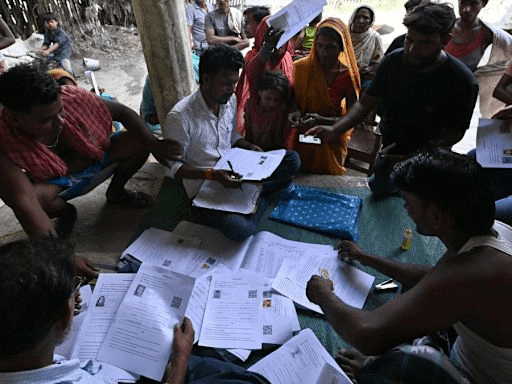
The exercise was conducted in Bihar and later discussed in relation to other States.
Key Concerns Raised by the Editorial
- Questionable Legal Basis
The editorial argues that:
• Intensive revision is ordinarily linked to Section 21(2).
• Special revision under Section 21(3) does not explicitly permit an intensive revision.
Concern:
The Court allegedly accepted ECI’s interpretation that SIR could be traced to Section 21(3), despite statutory ambiguity.
- Timing of the Revision
The article highlights that:
• Intensive revision was undertaken shortly before elections.
• Such exercises are time-consuming and administratively demanding.
Concern:
Large-scale revisions close to elections may:
• Cause confusion
• Lead to exclusions
• Reduce opportunities for correction
- Risk of Voter Exclusion
The editorial claims that:
• Millions of names could be deleted from electoral rolls.
• Citizens may not receive adequate opportunity for appeal or correction.
Potential consequences:
• Disenfranchisement
• Reduced electoral participation
• Legal disputes
Citizenship Verification Controversy
A major criticism concerns the role of ECI in determining proof of citizenship.
Editorial’s Argument
Traditionally:
• Citizenship is governed by the Citizenship Act.
• Administered by the Ministry of Home Affairs (MHA).
ECI’s role:
• Verify voter eligibility.
• Not determine citizenship independently.
Concern Raised
The editorial argues that:
• ECI prescribed documents to establish citizenship.
• This effectively allowed the Commission to perform functions normally associated with citizenship determination.
Why This Matters
Potential implications include:
• Inclusion or exclusion from electoral rolls.
• Impact on voting rights.
• Administrative uncertainty for affected citizens.
Broader Democratic Concerns
The article argues that electoral rolls are the foundation of democracy.
Therefore:
Electoral revision exercises must ensure:
• Transparency
• Due process
• Natural justice
• Adequate notice
• Effective grievance redressal
The editorial fears that excessive administrative discretion may weaken these safeguards.
Arguments Supporting SIR (Counter View)
Supporters argue that:
• Accurate electoral rolls are essential for free and fair elections.
• Duplicate and ineligible entries undermine electoral integrity.
• ECI possesses constitutional authority under Article 324.
• Periodic verification strengthens democratic legitimacy.
Thus, the debate is between:
Electoral Integrity vs Electoral Inclusion
UPSC Value Addition
Election Commission of India – Key Functions
• Preparation of electoral rolls
• Conduct of elections
• Registration of political parties
• Monitoring Model Code of Conduct
• Ensuring free and fair elections
Challenges in Electoral Roll Management
• Migration of population
• Duplicate entries
• Death registrations mismatch
• Inclusion errors
• Exclusion errors
• Citizenship-related disputes
• Technological and administrative limitations
Key Constitutional Principles Involved
• Universal Adult Suffrage
• Free and Fair Elections
• Rule of Law
• Due Process
• Democratic Participation
Conclusion
The editorial argues that while electoral roll accuracy is a legitimate objective, revision exercises must be conducted strictly within statutory limits and with robust procedural safeguards. Any electoral reform must balance the need for clean voter rolls with the constitutional guarantee that eligible citizens are not deprived of their right to vote.
Memorable Line:
“Electoral integrity is strengthened not merely by removing ineligible voters, but by ensuring that every eligible citizen remains represented in the democratic process.”