


The Hindu Editorial Analysis
12 March 2026
Holding up half the sky on India’s farms
(Source – The Hindu, International Edition, Page no.-10 )
Topic: GS Paper 3 – Agriculture & Economy | GS Paper 1 – Women Issues
Introduction
Women play a crucial role in India’s agricultural sector, contributing significantly to crop cultivation, livestock management and rural labour. Despite their central role, women farmers remain largely invisible in official statistics and face persistent wage inequalities. The recognition of the International Year of the Woman Farmer highlights the need to acknowledge and address these structural challenges.
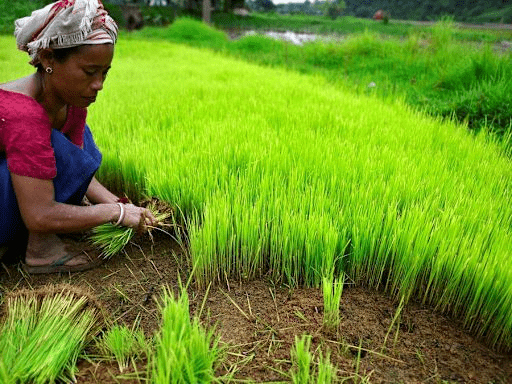
I. Scale of Women’s Participation in Agriculture
Women constitute a substantial proportion of India’s rural workforce.
Key observations include:
- Women’s labour force participation in rural areas has increased in recent years.
- Among rural women aged 15 and above, around 46.5% were part of the workforce in 2023–24, compared to 35% in 2011–12.
- However, much of this increase reflects self-employment in agriculture rather than formal employment opportunities.
In 2023–24:
- About 117.6 million women were engaged in agriculture.
- Of these, 21.7 million were hired workers, while 95.1 million were self-employed.
These figures demonstrate the centrality of women’s labour to India’s agricultural economy.
II. Undercounting of Women Workers
A major issue is the lack of reliable data on women’s work in agriculture.
Several factors contribute to this:
- Informal nature of rural employment
- Intermittent and seasonal work patterns
- Overlap between household labour and farm activities
Women’s agricultural work often includes multiple tasks such as:
- Crop cultivation
- Livestock care
- Fisheries and allied activities
- Household responsibilities
As a result, women frequently do not identify themselves as “workers” in surveys, leading to underestimation of their economic contribution.
III. Women’s Role in Agricultural Activities
1. Crop Production
Women constitute a large share of labour involved in crop cultivation.
Village-level studies indicate that:
- Women account for over half of the labour used in crop cultivation in many rural areas.
- Their participation varies depending on crop type, farming systems and regional socio-economic conditions.
2. Livestock Sector
The livestock sector is one of the most significant areas of women’s participation.
Key aspects include:
- Women perform most tasks related to animal care, feeding and milking.
- In households owning cattle or poultry, women often contribute several hours daily to livestock activities.
According to estimates:
- Around 40 million rural women are involved in livestock rearing.
Despite this, their economic contribution remains largely unrecognised.
3. Agricultural Wage Labour
Women also participate in wage labour, particularly in activities such as:
- Sowing
- Transplanting
- Weeding
- Harvesting
However, mechanisation and structural changes in agriculture have reduced labour demand in some regions.
IV. Gender Wage Gap in Agriculture
A major challenge faced by women workers is the significant gender wage disparity.
Key observations include:
- Women agricultural workers often earn less than ₹300 per day in several regions.
- In many cases, women’s wages are less than half of male wages.
Official statistics also show that:
- The average daily wage for female agricultural labourers is around ₹384, though significant regional variations exist.
This persistent wage gap reflects structural inequalities in rural labour markets.
V. Limited Economic Returns from Agricultural Work
Even when women participate extensively in agriculture, their earnings remain low.
For example:
- Income from livestock activities often amounts to only a fraction of prevailing wage rates.
- Returns from small-scale crop cultivation are often minimal.
Consequently, women’s labour sustains the rural economy but does not translate into adequate income or economic empowerment.
VI. Structural Constraints Faced by Women Farmers
Several structural barriers limit women’s economic empowerment in agriculture.
1. Lack of Land Ownership
Only about 10% of rural women own land, limiting their control over agricultural assets.
2. Limited Access to Credit and Technology
Women farmers often face difficulties accessing:
- Institutional credit
- Agricultural extension services
- Modern technologies
3. Weak Policy Recognition
Government policies often target “farmers” without adequately recognising women as independent agricultural producers.
VII. Policy Measures for Empowerment
To strengthen the role of women in agriculture, several policy interventions are needed.
These include:
- Improving data collection on women’s agricultural work.
- Promoting land ownership and inheritance rights for women.
- Ensuring equal wages for equal work.
- Expanding credit access, skill development and extension services.
- Strengthening women’s farmer collectives and self-help groups.
Conclusion
Women form the backbone of India’s agricultural economy, yet their contributions remain undercounted and undervalued. Addressing gender inequalities in wages, land ownership and institutional access is essential for achieving inclusive rural development. Recognising women as independent farmers rather than merely agricultural labourers is a crucial step toward transforming India’s agrarian economy.