


The Hindu Editorial Analysis
03 April 2026
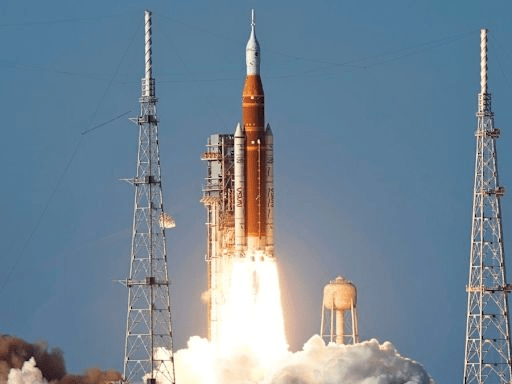
In the running : the launch of NASA’s Artemis II mission
(Source – The Hindu, International Edition, Page no.-10 )
Topic : GS Paper: GS-3 (Science & Technology, Space Technology, International Cooperation)
Context
The editorial discusses the launch of NASA’s Artemis II mission, highlighting its significance in advancing human space exploration and reaffirming the United States’ leadership in the emerging global moon race. It also examines the broader geopolitical and strategic dimensions of lunar exploration.
Core Issue
The central issue is the intensifying global competition in space exploration, particularly in lunar missions, driven by:
- Strategic and economic interests in lunar resources
- Technological prestige and geopolitical influence
- Competing models of international cooperation
This raises a key question:
Is the new space race about scientific exploration, or strategic dominance in outer space?
The New Moon Race
- The U.S. and China are leading contenders in lunar exploration
- Focus on establishing:
- Lunar bases
- Resource extraction systems
- Communication and refuelling infrastructure
Implication:
- Space is becoming an extension of geopolitical competition
Strategic Importance of the Moon
- Presence of water ice and other resources
- Potential for long-term human habitation
- Gateway for deeper space missions (e.g., Mars)
Outcome:
- Early movers may gain long-term strategic advantages
Competing Models: U.S. vs China
United States approach:
- Artemis programme includes:
- Multiple partner countries
- Commercial private players
- Emphasis on:
- Transparency
- Interoperability
- Data sharing
China’s approach:
- More state-driven and centralised
- Focus on building independent capabilities
Key contrast:
- Open, coalition-based model vs closed, state-led model
Concerns over Space Governance
- The idea of a “race” raises concerns about:
- Unequal access to space resources
- Militarisation of outer space
- Violation of the principle of space as a global commons
Observation:
- Existing global frameworks may be insufficient to regulate emerging competition
India’s Position
- India has signed the Artemis Accords (2023)
- Not yet a direct participant in Artemis missions
Current capabilities:
- Gaganyaan human spaceflight programme
- Plans for a space station
- Long-term ambition for lunar missions by 2040
Opportunities:
- Collaboration in joint missions
- Payload and technology partnerships
- Participation in global space governance
Benefits of Artemis Programme
- Strengthens U.S. leadership in space
- Builds international partnerships
- Encourages private sector innovation
- Provides a structured framework for future missions
Way Forward
- Promote peaceful and cooperative use of outer space
- Strengthen global governance frameworks for space resources
- Ensure equitable access for developing countries
- Encourage collaboration over competition
- Align India’s space strategy with long-term global opportunities
Conclusion
The Artemis II mission marks a significant step in humanity’s return to the Moon and signals the beginning of a new era in space exploration.
While competition may drive innovation, the future of space must be guided by cooperation, sustainability, and the principle of shared global commons.