


The Hindu Editorial Analysis
30 January 2026
Is India prepared for the end of globalisation?
(Source – The Hindu, International Edition, Page no.-8 )
Topic: GS 2 – Effect of policies and politics of developed and developing countries on India’s interests, Indian diaspora
Why in news: U.S. President Donald Trump’s remarks on India’s Russian oil imports and tariff threats highlight the erosion of multilateral trade norms and signal a broader U.S. shift towards mercantilist, power-centric bilateral negotiations.
Key Details
- U.S. President Donald Trump’s remarks on India’s Russian oil imports and tariff threats reflect a transactional and coercive approach to bilateral trade.
- The real crisis is not only in global trade, but in the political system governing it.
- The world is shifting back to mercantilism, where trade surpluses equal power and deficits signal weakness.
- Globalisation, once tied to liberalism, democracy, and cooperation, has effectively collapsed as a political system.
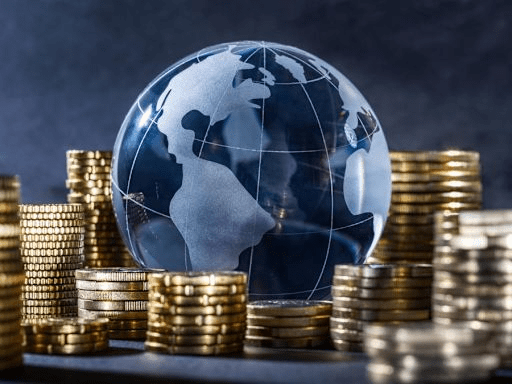
Globalisation as a Political System
- Globalisation was never just about the free flow of goods and services; it was a political framework governing markets, societies, and international relations.
- It shaped how states interacted with multilateral institutions, resolved disputes, and coordinated global governance.
- Over time, it became closely associated with liberal values, democratic norms, and international cooperation.
- This political consensus has now fractured, leaving global markets without a shared moral or institutional anchor.
Historical Roots of the Global Order
- The world economy was global long before it was liberal; early globalisation relied on force, colonial extraction, and unequal trade.
- Wealth in the industrialised North was built through domestic exploitation and overseas resource extraction, not free markets.
- After World War II, widespread destruction and decolonisation created space for a new multilateral order.
- Global institutions emerged to provide rules, legitimacy, and restraint, even when powerful states acted unilaterally.
Assumptions of the Post-War Multilateral System
- The system rested on open markets, free movement of capital, but restricted movement of people.
- It assumed cross-border enforcement of contracts and negotiated solutions for shared global resources.
- For a period, these assumptions appeared successful, as many countries experienced economic growth and poverty reduction.
- However, the system depended heavily on self-restraint by powerful states, which is now openly abandoned.
Unintended Economic and Social Consequences
- The first major consequence was rising inequality, as returns to capital grew much faster than wages.
- Deep integration of global supply chains led to deindustrialisation in some regions and industrial concentration in others.
- Increased migration and job losses created fertile ground for populist and nationalist politics.
- These pressures gradually undermined public support for globalisation in advanced economies.
China’s Disruptive Rise
- The second major shock came from China’s integration into the global economy without full compliance with multilateral norms.
- China benefited from open global markets and technology, while retaining strong state control over capital, labour, and information.
- Its persistent trade surpluses and excess capacity weakened industrial prospects in poorer countries, including India.
- Over time, China emerged as an alternative model combining economic growth with tight political control.
Shift Towards Sovereignty and Mercantilism
- Major economies now view global cooperation as a constraint rather than a benefit.
- Policies increasingly emphasise self-sufficiency, industrial protection, and politicisation of migration.
- International aid is becoming conditional on donor interests, eroding the principle of shared responsibility.
- Multilateral institutions are weakening, reducing the bargaining power of developing countries on global issues.
Way Forward
- Political elites must recognise the breakdown of the old order and act decisively, even if driven initially by self-interest.
- India must strengthen state capacity, especially in health, education, and social investment.
- Focus on select strategic domains where India can compete, such as digital public infrastructure, renewable energy, services, and democratic decentralisation.
- Build a new social contract that shares growth more equitably and improves social cohesion.
Conclusion
In the emerging mercantilist global order, India faces the risk of long-term marginalisation unless it strengthens its institutional and economic foundations. Despite its size and strategic importance, persistent weaknesses in state capacity, human capital investment, and social cohesion limit its ability to convert potential into power. The failure to broaden the gains of growth and build an inclusive social contract undermines India’s global aspirations. In a world where economic strength is increasingly tied to national capability, rhetoric alone cannot substitute for reform, and only sustained investment in institutions and people can enable India to play a meaningful global role.