


The Hindu Editorial
17 June 2026
Moving from War to Deal in a Deeply Divided Region
(Source – The Hindu, Editorial Page no. – 8)
Topic: GS-2: West Asia | International Relations | Global Security | India’s Foreign Policy
Context
The editorial argues that the recent U.S.–Iran ceasefire and emerging diplomatic engagement demonstrate a key lesson: military force alone cannot resolve regional conflicts. Lasting peace requires political settlements, regional security arrangements, and diplomatic engagement.
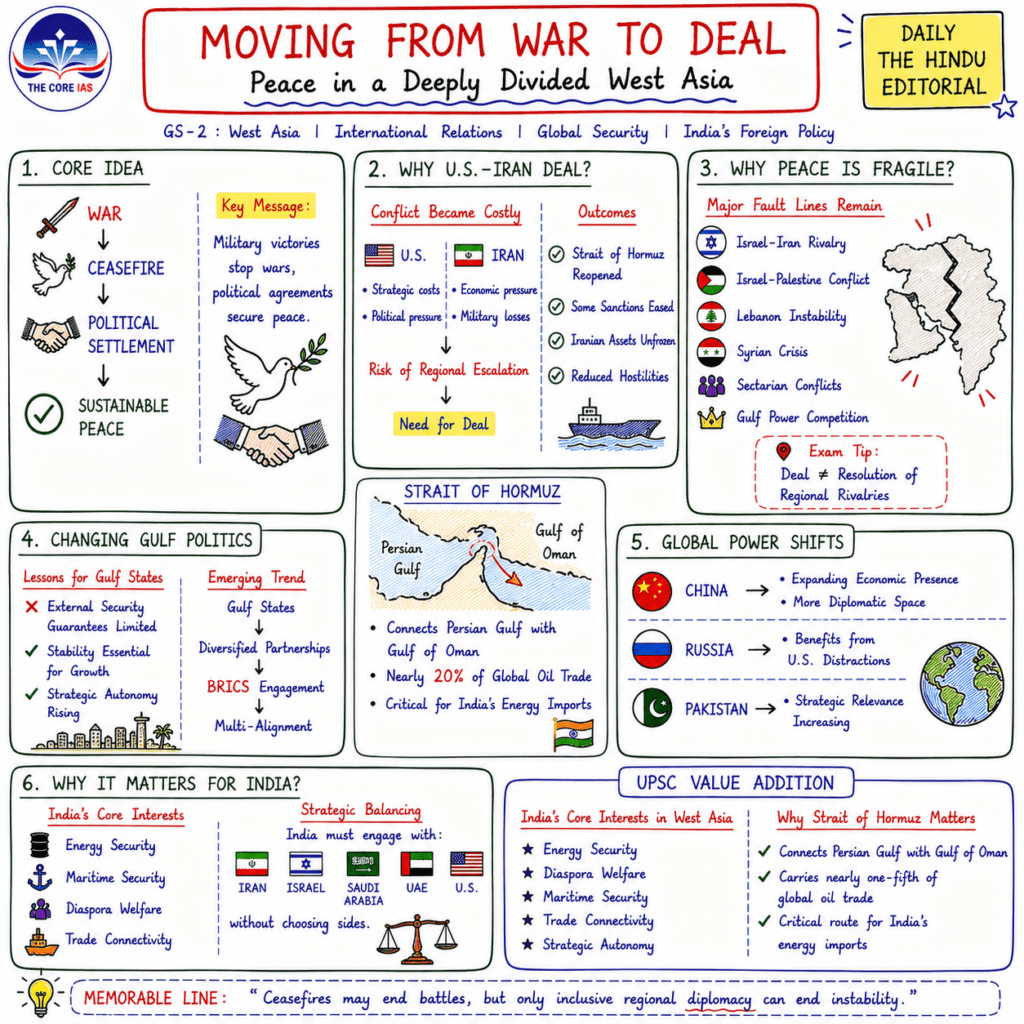
Core Argument
The U.S.–Iran deal may pause immediate hostilities, but it does not address the deeper geopolitical rivalries shaping West Asia.
Military victories can stop wars; only political agreements can secure peace.
Why the U.S.–Iran Deal Emerged
Unsustainable Conflict
Both sides faced mounting costs:
- U.S. faced strategic and political setbacks.
- Iran suffered military and economic pressure.
- Risk of wider regional escalation increased.
Key Elements of the Deal
Reported outcomes include:
- Reopening of the Strait of Hormuz
- Lifting of some sanctions
- Unfreezing of Iranian assets
- Temporary nuclear-related commitments
- Reduction in direct hostilities
Significance
- Prevents immediate escalation.
- Stabilizes global energy markets.
- Creates space for diplomacy.
Why Peace Remains Fragile
Iran Retains Regional Influence
Iran continues to possess:
- Strong missile capabilities
- Influence over regional proxy groups
- Strategic leverage in the Gulf
Thus, a deal does not eliminate underlying security concerns.
Israel’s Concerns
Israel remains worried about:
- Iran’s regional influence
- Hezbollah’s presence in Lebanon
- Long-term security threats
Potential disagreements between Israel and the U.S. could affect implementation.
Unresolved Regional Fault Lines
Major disputes remain:
- Israel–Palestine conflict
- Lebanon instability
- Syrian crisis
- Sectarian rivalries
- Gulf power competition
Gulf Countries: Exposed Vulnerabilities
The conflict highlighted weaknesses in Gulf security arrangements.
Key Lessons
- External security guarantees have limits.
- Regional divisions remain deep.
- Economic ambitions require stability.
Emerging Trends
- Growing strategic autonomy among Gulf states.
- Diversification of foreign partnerships.
- Greater engagement with groups such as BRICS.
Global Power Shifts
China
Benefits from:
- Reduced U.S. influence
- Greater diplomatic leverage in West Asia
- Expanding economic presence
Russia
- Gains from prolonged geopolitical distractions.
- Reinforces its strategy of challenging Western influence.
Pakistan
- Increasing strategic relevance due to geography.
- May gain leverage amid changing regional dynamics.
Implications for India
Energy Security
India remains highly dependent on:
- Gulf oil imports
- LNG supplies
- Maritime trade routes
Any disruption in Hormuz directly impacts:
- Fuel prices
- Inflation
- Trade flows
Need for Strategic Balance
India must maintain relations with:
- Iran
- Israel
- Saudi Arabia
- UAE
- United States
Without becoming part of regional rivalries.
Challenges Ahead
- Rising Chinese influence in West Asia.
- Growing regional fragmentation.
- Uncertain U.S. commitments.
- Vulnerability of sea-lanes and energy routes.
UPSC Value Addition
Why Strait of Hormuz Matters
- Connects Persian Gulf with Gulf of Oman.
- Carries nearly one-fifth of global oil trade.
- Critical route for India’s energy imports.
India’s Core Interests in West Asia
- Energy security
- Diaspora welfare
- Maritime security
- Trade connectivity
- Strategic autonomy
Way Forward
- Support diplomatic resolution of regional conflicts.
- Diversify energy sources and trade routes.
- Strengthen maritime security in the Indian Ocean.
- Maintain balanced engagement with all regional powers.
- Promote strategic autonomy and multi-alignment.
Conclusion
The U.S.–Iran deal may reduce immediate tensions, but West Asia remains deeply divided by historical rivalries, competing power centres, and unresolved conflicts. For India, the challenge is not choosing sides but preserving strategic autonomy while protecting its energy, economic, and security interests.
Memorable Line:
“Ceasefires may end battles, but only inclusive regional diplomacy can end instability.”