


The Hindu Editorial Analysis
25 December 2025
New labour codes, the threats to informal workers
(Source – The Hindu, International Edition – Page No. – 8)
Topic : GS Paper – GS-2 : Social Justice, Labour Reforms, Welfare of Vulnerable Sections, Governance
Context
The editorial critically examines India’s four new labour codes enacted between 2019 and 2020, with a specific focus on their adverse implications for informal (unorganised) workers. While the codes are officially projected as instruments of consolidation, simplification, and universalisation of labour laws, workers’ unions and civil society groups argue that they dilute long-standing protections for informal workers. As States like Tamil Nadu deliberate on framing rules under the Social Security Code, the editorial highlights why the codes pose structural threats to the rights, health, and welfare architecture of informal labour in India.
Core Issue
The central issue is whether the new labour codes genuinely extend social security to informal workers or systematically weaken existing sector-specific protections without offering viable alternatives.
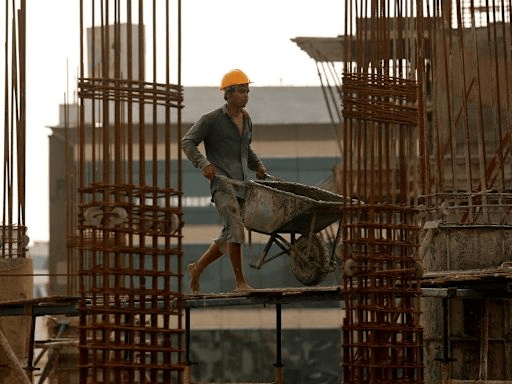
Informal workers:
- Constitute nearly 90% of India’s workforce,
- Contribute about 65% of GDP,
- Are disproportionately exposed to unsafe working conditions, low wages, and absence of social security.
Despite this reality, the codes prioritise organised sector rationalisation while marginalising informal labour concerns.
Procedural and Consultative Deficit
A major concern is the absence of tripartite consultation.
- The four labour codes were passed without meaningful dialogue between:
- Workers’ organisations,
- Employers,
- Government representatives at the Indian Labour Conference (ILC).
- This undermines the spirit of participatory labour governance and deviates from established democratic and international labour practices.
Dilution of Occupational Health and Safety
The Occupational Safety, Health and Working Conditions (OSHWC) Code replaces a robust inspection system with a web-based mechanism.
- Digital inspections are inadequate for:
- Monitoring workplace safety,
- Ensuring minimum wage compliance.
- This shift violates ILO Convention 81, ratified by India, which mandates effective labour inspection systems.
Further, the Code fails to address occupational diseases prevalent among informal workers:
- Silicosis in construction,
- Cancer among agricultural workers due to pesticide exposure,
- Chronic kidney and skin diseases among salt workers.
This neglect violates ILO Convention 161, which calls for comprehensive occupational health services, including identification, treatment, and rehabilitation.
Repeal of Sector-Specific Legal Protections
The labour codes threaten or repeal several sector-specific laws, most notably:
- Building and Other Construction Workers (BOCW) Act, 1996.
Under the BOCW Act:
- Around 180 rules ensured construction-site safety.
- These provisions are now missing from the OSHWC Code.
Given that informal workers are excluded from the Employees’ State Insurance (ESI) framework, repealing sector-specific laws leaves them without any recognised state-backed occupational health safeguards.
Threats to Welfare Boards and Funds
The Social Security (SS) Code introduces serious uncertainties:
- A single welfare board is proposed for all unorganised workers, ignoring sectoral diversity.
- Existing welfare boards funded through sector-specific cesses (beedi, salt, mining, construction) are abolished.
- These cesses were removed during GST reforms without any assured replacement funding mechanism.
This implies:
- No guaranteed welfare funds,
- Increased centralisation of welfare resources,
- Potential diversion of accumulated funds (estimated at ₹1 lakh crore) through systems like e-Shram.
Impact on State-Level Welfare Architecture
States like Tamil Nadu face disproportionate consequences:
- Tamil Nadu has 39 sector-specific welfare boards, offering:
- Old-age pensions,
- Maternity assistance,
- Educational support for workers’ children.
- The SS Code has no saving clauses to protect these institutions.
The dismantling of this welfare architecture risks undoing decades of worker-led advocacy and institutional development.
Federal and Governance Concerns
Some States, such as Andhra Pradesh, have already shut down welfare boards in response to the Codes. The editorial argues that:
- Labour is a Concurrent List subject,
- States must retain autonomy to protect informal workers,
- Centralised rule-making undermines cooperative federalism.
Tamil Nadu’s hesitation in notifying rules reflects legitimate governance concerns rather than administrative delay.
What Needs to Be Done
To safeguard informal workers:
- States must protect existing welfare boards and resist dilution.
- Saving clauses should be introduced to preserve State-level labour institutions.
- Sector-specific laws addressing occupational risks must be retained or strengthened.
- Labour reforms must be aligned with India’s ILO commitments.
- Tripartite consultation should be restored as the cornerstone of labour policymaking.
Conclusion
The new labour codes, far from universalising social security, risk dismantling the fragile yet vital welfare ecosystem supporting India’s informal workforce. By weakening occupational safety norms, dissolving welfare boards, and centralising control without safeguards, the codes threaten to exacerbate vulnerability among those who already bear the highest economic and health risks.
Unless States assert their constitutional role and prioritise worker welfare, labour “reform” may come at the cost of social justice, dignity, and livelihood security for millions of informal workers.