


The Hindu Editorial Analysis
19 March 2026
No end to suffering: India must enlist more support against Pakistan’s bombing of Afghanistan
(Source – The Hindu, International Edition, Page no.-10 )
Topic: GS Paper 2 – International Relations India’s Neighbourhood, Security
Introduction
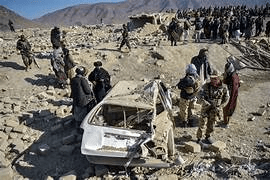
The intensifying conflict between Pakistan and Afghanistan, marked by cross-border airstrikes and escalating violence along the Durand Line, has created a serious humanitarian and security crisis. The destruction of civilian infrastructure, including medical facilities, highlights the severity of the situation. For India, this conflict presents both a strategic challenge and an opportunity to recalibrate its regional diplomacy.
I. Causes of Pakistan–Afghanistan Tensions
The conflict is rooted in long-standing political and security issues.
1. Durand Line Dispute
- Afghanistan has historically refused to recognise the Durand Line as a legitimate border.
- Frequent clashes occur along this contested boundary.
2. Tehreek-e-Taliban Pakistan (TTP) Issue
- Pakistan accuses the Afghan Taliban of harbouring TTP militants.
- Afghanistan denies these allegations, leading to mistrust.
3. Cross-Border Terrorism
- TTP attacks inside Pakistan have intensified tensions.
- Pakistan’s retaliatory strikes inside Afghanistan escalate the conflict.
II. Recent Escalation
Recent developments indicate a sharp escalation:
- Pakistan conducted airstrikes targeting alleged militant bases in Afghanistan.
- Civilian casualties, including the destruction of a rehabilitation centre in Kabul, have drawn international concern.
- Afghanistan has accused Pakistan of violating sovereignty and targeting civilians.
The conflict has thus moved from sporadic skirmishes to a more sustained confrontation.
III. Humanitarian Consequences
The conflict has severe humanitarian implications:
- Large-scale civilian casualties, including vulnerable groups.
- Destruction of healthcare infrastructure.
- Disruption of livelihoods and displacement.
- Increased vulnerability of women and marginalised communities.
Afghanistan, already facing economic collapse and humanitarian crisis, is likely to be disproportionately affected.
IV. India’s Position and Constraints
India has taken a strong stance condemning attacks on civilian targets.
However, its role is constrained due to:
1. Absence of Direct Diplomatic Channels
- India does not formally recognise the Taliban regime.
- Limited engagement restricts its influence.
2. No Dialogue with Pakistan
- Lack of bilateral engagement reduces diplomatic options.
3. Strategic Limitations
- India cannot directly intervene in the conflict.
- Its role remains largely diplomatic and humanitarian.
V. Regional and Global Dimensions
1. Role of the United States
- The U.S. has expressed support for Pakistan’s actions in counter-terrorism.
- This may embolden Pakistan’s military strategy.
2. Impact of West Asia Conflict
- Global attention is diverted due to the Iran–Israel conflict.
- Reduced international scrutiny allows escalation in South Asia.
3. SCO and Regional Stakeholders
- Countries in the Shanghai Cooperation Organisation (SCO) have stakes in regional stability.
- A coordinated regional response could help de-escalate tensions.
VI. Strategic Implications for India
The conflict has multiple implications:
1. Security Concerns
- Instability in Afghanistan can lead to increased terrorism risks.
- Spillover effects may impact India’s security environment.
2. Regional Stability
- A prolonged conflict could destabilise South Asia.
- Trade and connectivity projects may be disrupted.
3. Strategic Opportunity
- Pakistan’s involvement in a two-front conflict (with Afghanistan and India) may limit its strategic capacity.
VII. Way Forward for India
India must adopt a proactive and balanced strategy.
Key steps include:
- Mobilising international opinion against civilian targeting.
- Engaging regional platforms like the SCO for conflict resolution.
- Providing humanitarian assistance to Afghanistan.
- Maintaining strategic vigilance along its borders.
- Exploring limited diplomatic engagement with the Taliban for pragmatic cooperation.
Conclusion
The Pakistan–Afghanistan conflict represents a complex mix of security, humanitarian and geopolitical challenges. For India, the priority must be to prevent regional destabilisation while safeguarding its strategic interests. By leveraging multilateral platforms and adopting a calibrated diplomatic approach, India can contribute to de-escalation and regional stability.