


The Hindu Editorial Analysis
24 December 2025
Pakistan is back in West Asia’s good graces
(Source – The Hindu, International Edition – Page No. – 8)
Topic : GS Paper – GS-2 : International Relations, India’s Neighbourhood, West Asia, Security and Diplomacy
Context
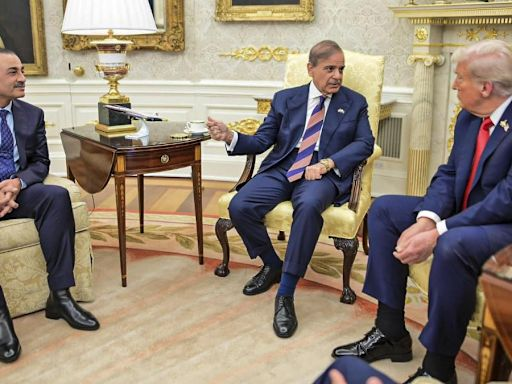
The editorial analyses Pakistan’s renewed strategic relevance in West Asia amid shifting regional geopolitics. Against a backdrop of prolonged conflicts in Gaza, Red Sea instability, weakening U.S. security guarantees, and growing Arab concerns over Iran, Pakistan—under the firm control of Field Marshal Asim Munir—has re-emerged as a useful security partner for Gulf monarchies. Recent diplomatic, military, and defence engagements signal Islamabad’s reintegration into West Asia’s strategic calculus after years of marginalisation.
Core Issue
The central issue is whether Pakistan’s renewed acceptance in West Asia represents a structural strategic realignment or a temporary convergence driven by regional insecurity.
Pakistan’s resurgence is not the outcome of economic reform or diplomatic finesse, but of:
- Heightened regional militarisation,
- Arab states’ search for reliable security partners,
- Pakistan Army’s ability to offer manpower, training, and military cooperation.
This raises questions about the sustainability of Pakistan’s regional relevance.
Pakistan’s Military-Centric Diplomacy
Pakistan’s engagement with West Asia is increasingly driven by its military establishment rather than civilian leadership.
- Field Marshal Asim Munir’s consolidation of power coincides with renewed geopolitical opportunities.
- The Pakistan Army is viewed by Gulf states as a stable, disciplined institution capable of delivering security cooperation.
- Pakistan’s military utility—rather than its political or economic stability—has become its primary diplomatic currency.
This reinforces Pakistan’s long-standing pattern of leveraging strategic insecurity for external relevance.
Agreement with Saudi Arabia
The Strategic Mutual Defence Agreement (SMDA) signed with Saudi Arabia in September 2025 marked a turning point.
- It signalled Saudi Arabia’s renewed confidence in Pakistan as a defence partner.
- Pakistan Prime Minister Shehbaz Sharif’s low-profile diplomacy contrasted with the military’s active engagement.
- For Riyadh, Pakistan offers trained manpower and strategic depth without direct ideological entanglement.
The agreement reflects Gulf states’ pragmatic approach to security amid regional volatility.
Changing Security Dynamics in West Asia
The ongoing Gaza conflict since 2023 and Israel’s expanding military operations across the region have reshaped threat perceptions.
- Arab states increasingly doubt the reliability of U.S. military intervention.
- Attacks involving Iran, Israel, and U.S. installations have heightened fears of escalation.
- Regional powers are moving towards collective defence arrangements and diversified security partnerships.
In this environment, Pakistan’s military capabilities have gained renewed relevance.
Pakistan’s Past Marginalisation
Pakistan’s earlier exclusion from West Asian diplomacy stemmed from:
- Concerns over extremism,
- Security-related visa restrictions by Gulf states,
- Financial instability and IMF dependence.
Notably, Pakistan refused to send troops to Saudi Arabia’s Yemen campaign to avoid antagonising Iran. Its discomfort was evident in 2019 when India’s External Affairs Minister addressed the Organisation of Islamic Cooperation, forcing Pakistan to stage a protest walkout.
These episodes highlight Pakistan’s previously diminished standing.
India Factor and Regional Signalling
India’s growing engagement with Gulf states has altered traditional alignments.
- Arab powers increasingly adopt an anti-extremism posture.
- India’s diplomatic outreach, including high-level visits, has been welcomed despite Pakistan’s objections.
- Pakistan’s renewed acceptance partly reflects Arab states hedging their security options rather than endorsing Pakistan’s ideological positions.
This underscores a pragmatic, interest-based West Asian diplomacy.
The Road Ahead
Pakistan’s return to West Asia’s good graces is driven by geopolitical opportunism, not structural reform.
- Field Marshal Munir has capitalised on prevailing security anxieties.
- However, Pakistan’s internal economic fragility and political instability remain unresolved.
- Military relevance does not translate into long-term strategic trust.
While Pakistan may benefit tactically from West Asia’s evolving security needs, the durability of this engagement remains uncertain.
Conclusion
Pakistan’s renewed relevance in West Asia reflects the region’s shifting security priorities rather than Islamabad’s transformation. The Pakistan Army has once again positioned itself as a utilitarian partner in times of crisis. However, opportunism has limits. Without addressing its core economic, political, and ideological challenges, Pakistan’s regional acceptance is likely to remain conditional and transient.
In the long run, military leverage alone cannot compensate for structural weaknesses—both domestically and diplomatically.