


The Hindu Editorial
16 June 2026
Technology Drives India-France Strategic Convergence
(Source – The Hindu, Editorial Page no. – 8)
Topic: GS-2: Bilateral Relations | India-France Relations | Science & Technology Diplomacy
Context
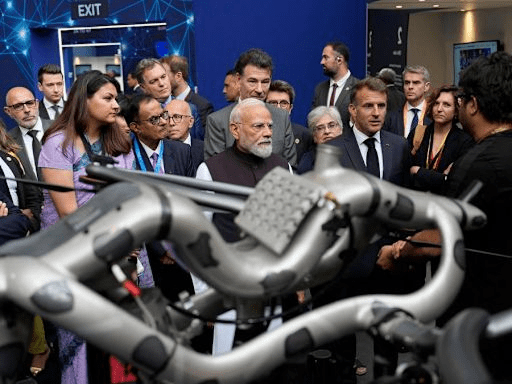
Prime Minister Narendra Modi’s visit to France and participation in events such as Bharat Innovates and VivaTech 2026 highlight the growing importance of technology and innovation in India-France relations. The editorial argues that technology is emerging as the central pillar of the India-France strategic partnership.
Core Argument
India and France are moving beyond traditional cooperation in defence and nuclear energy towards a broader partnership based on:
- Technology and innovation
- Artificial Intelligence (AI)
- Cybersecurity
- Space cooperation
- Biotechnology and healthcare
- Sustainable development
- Startup ecosystems
Technology is becoming the primary driver of strategic convergence between the two countries.
Emerging Pillars of Partnership
Technology and Innovation
Key areas of cooperation include:
- Artificial Intelligence
- Cybersecurity
- Digital technologies
- Biotechnology
- Health-tech
- Green technologies
- Startup collaboration
France offers advanced technological capabilities, while India contributes scale, digital public infrastructure, frugal innovation, and a vibrant startup ecosystem.
Startup and Innovation Ecosystem
Platforms such as:
- Bharat Innovates
- VivaTech Summit
can facilitate:
- Startup partnerships
- Venture capital collaboration
- Joint research initiatives
- Technology transfer
This can strengthen private-sector engagement in bilateral relations.
Defence and Space Cooperation
The editorial highlights the need to expand cooperation in:
- Co-design and co-production of defence platforms
- Small Modular Reactors (SMRs)
- Joint satellite development
- Human spaceflight programmes
Such initiatives would deepen strategic and technological interdependence.
Cooperation in Africa
India and France can jointly contribute to:
- Capacity building
- Infrastructure development
- Sustainable growth initiatives
- Development partnerships in Africa
This remains an underutilised area of cooperation.
Geopolitical Significance
Shared Strategic Autonomy
India and France share similar views on:
- Strategic autonomy
- Multipolarity
- Independent foreign policy choices
This creates a strong foundation for long-term cooperation amid global geopolitical uncertainties.
Global South Perspective
Both countries are concerned about:
- Ukraine conflict
- West Asian instability
- Economic disruptions affecting developing countries
This strengthens coordination on global governance issues.
The G-7 and the ‘D10’ Debate
The editorial notes growing discussions about expanding the G-7 into a broader grouping of major democracies (D10).
Potential implications:
- Greater role for India in global governance
- Enhanced strategic engagement with Europe
- Stronger cooperation among democratic middle powers
India will need to closely monitor these developments.
UPSC Value Addition
Key Areas of India-France Cooperation
- Defence (Rafale, Scorpene submarines)
- Civil nuclear energy
- Space cooperation
- Artificial Intelligence
- Cybersecurity
- Climate action
- Blue economy
Why France Matters to India
- Reliable strategic partner
- Supports India’s strategic autonomy
- Important Indo-Pacific partner
- Gateway to advanced European technologies
- Strong defence-industrial cooperation
Way Forward
- Expand joint technology research and innovation programmes.
- Accelerate defence co-development and co-production.
- Strengthen AI, semiconductor, and cyber cooperation.
- Promote startup and venture capital partnerships.
- Enhance collaboration in Africa and the Indo-Pacific.
Conclusion
The editorial argues that technology and innovation are transforming India-France ties from a traditional strategic partnership into a future-oriented collaboration. As two major proponents of strategic autonomy, India and France are well-positioned to shape a multipolar and technology-driven global order.
Memorable Line:
“Technology is no longer a sector of cooperation; it is the new foundation of strategic partnerships.”