


The Hindu Editorial Analysis
20 February 2026
Tehran reenters the global geopolitical spotlight
(Source – The Hindu, International Edition, Page no.-10 )
Topic: GS Paper 2 – International Relations
Context
Iran has once again emerged at the centre of global geopolitics amid renewed tensions over its nuclear programme. After the collapse of the 2015 Joint Comprehensive Plan of Action (JCPOA) following the U.S. withdrawal in 2018, diplomatic efforts have resurfaced in 2026, even as military posturing intensifies in the Gulf region.
The return of the Iran nuclear file signals renewed uncertainty in West Asia at a time when global disorder appears more pronounced than stability.
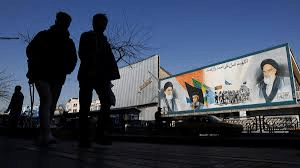
The JCPOA Background
In 2015, the P5+1 (United States, United Kingdom, France, Russia, China + Germany) negotiated the JCPOA with Iran.
Objectives:
- Impose limits on Iran’s nuclear programme.
- Establish inspection mechanisms.
- Prevent weaponisation while allowing civilian nuclear use.
- Ease sanctions in exchange for compliance.
The agreement represented a multilateral diplomatic breakthrough aimed at stabilising West Asia.
The Trump Years and Policy Reversal
In 2018:
- The U.S., under President Donald Trump, exited the JCPOA.
- Sanctions were reimposed.
- Iran’s nuclear advancement resumed.
- European allies were left diplomatically constrained.
Fast forward to 2026:
- The U.S. has increased military deployments in the region.
- Simultaneously, diplomatic engagement with Iran continues, reportedly mediated by Oman.
- The U.S. appears to be pursuing a new or modified deal.
This dual-track strategy — military pressure alongside negotiation — echoes earlier diplomatic cycles.
Israel’s Role
Israel has consistently framed Iran’s nuclear programme as an existential threat.
- Israeli intelligence assessments have often pushed for harder action.
- Military strikes and covert operations have been part of deterrence efforts.
- Israeli influence has shaped Washington’s policy debates.
The strategic triangle of U.S.–Iran–Israel remains central to West Asian security calculations.
Regional Dynamics: Arab Powers and Escalation Concerns
Gulf Arab states:
- Have invested heavily in strategic relations with Washington.
- Do not favour regional escalation.
- Prefer negotiations over a prolonged conflict.
Iran has warned that any attack would provoke retaliation against U.S. military installations in the Gulf region. The risk lies not only in Iranian intentions but in unpredictability surrounding U.S. decision-making.
West Asia remains vulnerable to miscalculation.
Iran at a Domestic Crossroads
Internally, Iran faces:
- Persistent protests.
- Economic strain due to sanctions.
- Political alignment between moderates and conservatives.
- Pressure to project nationalist unity.
Domestic political shifts influence Tehran’s negotiating posture.
The Stakes for India
India’s interests are directly affected by developments involving Iran.
1. Energy Security
- Iran was once among India’s top oil suppliers.
- U.S. sanctions sharply reduced oil imports.
- Any revival of a deal could reopen energy diversification opportunities.
2. Connectivity Projects
- Chabahar Port is a key Indian strategic investment.
- Provides access to Afghanistan and Central Asia.
- Offers a counterbalance to China–Pakistan corridors.
Sanctions uncertainty complicates project continuity.
3. Regional Balance
Iran’s relations with:
- Pakistan
- The Taliban in Afghanistan
- Central Asian states
Have implications for India’s security and geopolitical positioning.
Strategic Autonomy Considerations
India historically supported the JCPOA framework as:
- A stabilising instrument.
- A means to ease sanctions pressure.
- A channel to resume oil trade and connectivity.
However, U.S. pressure in previous cycles forced India to curtail oil imports, highlighting tensions between partnership with Washington and independent West Asia engagement.
Renewed friction in the Iran file tests India’s:
- Multi-alignment strategy.
- Diplomatic balancing skills.
- Energy diversification policy.
Global Implications
The Iran nuclear question illustrates broader global trends:
- Fragmentation of multilateral agreements.
- Rise of unilateral sanctions.
- Militarisation alongside diplomacy.
- Erosion of predictability in international relations.
At a time when global order appears increasingly disordered, Iran’s resurgence as a flashpoint reinforces systemic instability.
Conclusion
Tehran’s reentry into the geopolitical spotlight underscores the fragility of West Asian stability and the limits of past diplomatic arrangements. Whether through a revived nuclear agreement or renewed confrontation, the trajectory of U.S.–Iran relations will shape regional and global security landscapes.
For India, the challenge lies in safeguarding energy security, protecting strategic investments such as Chabahar, and maintaining diplomatic balance between competing powers.
In a region defined by volatility, sustained diplomacy remains preferable to escalation — for West Asia and for India’s broader strategic interests.