


The Hindu Editorial Analysis
27 March 2026
The key to India’s multi-domain deterrence, capabilities
(Source – The Hindu, International Edition, Page no.-10 )
Topic : GS Paper: GS-3 (Internal Security, Defence Technology, Indigenisation of Defence, Security Challenges)
Context
The editorial analyses India’s growing military challenge vis-à-vis China and argues for the urgent need to develop a robust defence-industrial base. It highlights that India must move beyond piecemeal capability building and adopt a multi-domain deterrence strategy, integrating technology, doctrine, and industrial capacity to effectively counter China’s military advantage.
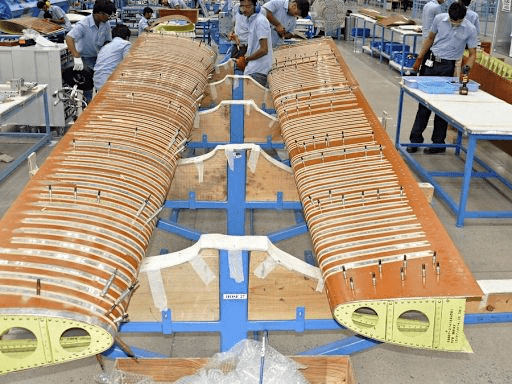
Core Issue
India faces a widening capability gap with China, particularly due to:
- Weak translation of military needs into industrial production
- Lack of scale and speed in defence manufacturing
- Inadequate integration of emerging technologies into warfare
The central question is:
How can India build a credible, integrated multi-domain deterrence framework while overcoming structural industrial and doctrinal limitations?
Hard Choices and Strategic Approaches
The editorial outlines three possible strategic pathways:
1. Bold Technological Leap
- Invest in cutting-edge warfighting technologies
- Risk: Implementation failure may create new vulnerabilities
- Constraint: Limited industrial capacity to scale innovations
2. Conservative Incremental Approach
- Integrate emerging technologies with existing systems
- Improve cyber, space, and electronic warfare capabilities
- Limitation: May not significantly alter the strategic balance with China
3. Middle Path (Preferred Strategy)
- Continue legacy systems while building enabling layers such as:
- Command and Control (C2)
- Intelligence, Surveillance, Reconnaissance (ISR)
- Deep-strike and logistics infrastructure
- Aim: Gradual transition toward Multi-Domain Operations (MDO)
Structural and Industrial Constraints
India’s key challenge is not technological incompetence but institutional and industrial weakness:
- Defence-industrial base lacks structure for speed and scale
- Dependence on legacy platforms and slow procurement processes
- Limited synergy between military, industry, and research institutions
Critical requirement:
Expansion of defence manufacturing in partnership with the private sector
Need for Defence Industrial Reform
To build long-term capacity, India must:
- Remove bureaucratic red tape
- Ensure budgetary stability
- Provide long-term contracts for defence production
- Encourage private sector participation
- Shift mindset from state-led to hybrid industrial model
This aligns with the idea that industrial capacity is the backbone of military power.
Fixing the Enabling Layers
The editorial stresses that modern warfare depends on enabling systems, not just platforms:
1. Strengthening C4ISR Systems
- Command, Control, Communications, Computers, Intelligence, Surveillance, Reconnaissance
- Enables real-time battlefield awareness and coordination
2. Layered Warfare Capability
- Integration of:
- Missiles, drones, aircraft (strike layer)
- Tanks, infantry (frontline layer)
- Logistics and infrastructure (rear support layer)
3. Information and Electronic Dominance
- Cyber warfare, space capabilities, and electronic warfare
- Ability to degrade enemy ISR systems
Strategic Deterrence Dimensions
- India must identify China’s vulnerabilities and exploit them
- Develop cheap, scalable ISR systems for sustained conflict
- Strengthen nuclear deterrence to offset conventional asymmetry
Key Concern:
China’s superior industrial capacity allows rapid wartime production, creating a dangerous inventory gap for India.
Procurement and Capability Prioritisation
India’s procurement strategy must shift from:
- Service-specific acquisitions → Integrated capability building
- Quantity-based spending → Smart prioritisation of deterrence assets
Requires:
- Political-military consensus
- Clear articulation of trade-offs and strategic goals
Way Forward
- Focus on critical enabling layers rather than isolated acquisitions
- Build a resilient defence-industrial ecosystem
- Promote theatre integration with doctrinal convergence
- Incentivise domestic production to bridge inventory gaps
- Accelerate transition toward multi-domain warfare capability
Conclusion
India’s deterrence credibility will depend not merely on acquiring advanced weapons, but on building an integrated system combining technology, doctrine, and industrial strength.
Without strengthening its defence-industrial base and enabling layers, India risks strategic vulnerability vis-à-vis China.
A shift toward multi-domain, industrially-backed deterrence is therefore not optional—it is essential for safeguarding national security in an era of evolving warfare.