


The Hindu Editorial Analysis
12 December 2025
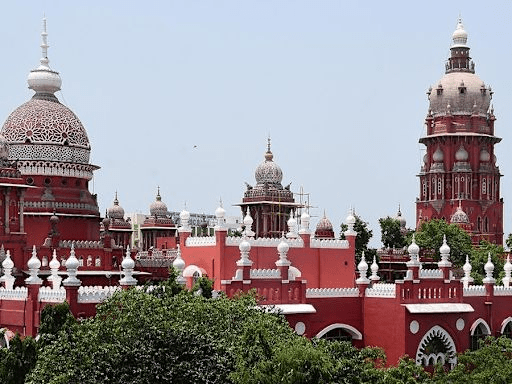
The Madras High Court must break its silence
(Source – The Hindu, International Edition – Page No. – 8)
Topic : GS Paper: GS-2 (Judiciary, Governance, Constitutional Bodies)
Context
The editorial examines the controversy surrounding recent judicial appointments recommended by the Madras High Court Collegium, particularly the exclusion of Justice Nisha Banu—a senior-most judge—from the Collegium recommendation, while another judge was included without a clear explanation. The silence of the High Court Collegium has raised serious concerns about procedure, transparency, and constitutional propriety.
Core Issue
Under Article 217 and the Memorandum of Procedure (MoP), High Court judges are to be recommended by a Collegium consisting of:
- The Chief Justice of the High Court, and
- The two senior-most judges.
In this case, the State government sought clarification on:
- Why Justice Nisha Banu, a Collegium judge, was excluded, and
- On what legal authority another judge was included in her place.
Instead of addressing these procedural doubts, the Collegium proceeded with further recommendations, without clarifying the constitutional issue raised.
Why Procedure Matters
- In constitutional governance, procedure is not a technicality but a safeguard of legitimacy.
- The Collegium system itself is a judicially created mechanism, not a statutory one, and therefore derives legitimacy only from strict adherence to self-evolved norms.
- Any deviation without explanation weakens public confidence in judicial independence.
When a judge is excluded without recorded reasons, and another included without jurisdictional clarity, the decision-making authority itself becomes questionable.
Silence as a Constitutional Problem
- The editorial argues that silence is not neutrality when institutional integrity is at stake.
- Lack of explanation fuels suspicion of:
- Arbitrariness,
- Bias (political, ideological, or personal),
- Erosion of internal judicial accountability.
This undermines the judiciary’s moral authority, especially when it regularly demands reasoned orders from the executive.
Systemic Concerns with the Collegium
The episode reflects broader criticisms of the Collegium system:
- Opacity in decision-making,
- Absence of written reasons,
- Limited accountability mechanisms,
- Perceived lack of diversity and representation.
The issue is not the eligibility of candidates, but whether the method of recommendation conforms to constitutional norms.
Need for Reform and Judicial Introspection
- The Madras High Court must publicly clarify whether its actions complied with the Constitution and the MoP.
- The Supreme Court should revisit long-pending demands for:
- Clear rules of Collegium composition,
- Mandatory disclosure of reasons,
- Greater transparency to preserve judicial credibility.
As the Tamil ethical maxim quoted in the article suggests:
Justice requires search, fairness, and reasoned action, not silence.
Conclusion
Judicial independence is sustained not only by insulation from executive interference, but also by internal transparency and procedural fidelity.
If the constitution of the Collegium itself becomes doubtful, its recommendations risk losing legitimacy, creating a constitutional crisis between the judiciary and the State.
Breaking silence, therefore, is not optional—it is essential to protect the integrity of India’s judicial institutions.