


The Hindu Editorial Analysis
03 February 2026
Wetlands as a national public good
(Source – The Hindu, International Edition, Page no.-10 )
Topic: GS Paper – GS 3 : Environment & Ecology, Conservation, Disaster Management, Sustainable Development
Context
World Wetlands Day 2026 was observed on February 2 with the theme “Wetlands and traditional knowledge: Celebrating cultural heritage”. In India, this theme carries special relevance given the long history of communities sustaining livelihoods and ecosystems through wetland-based practices.
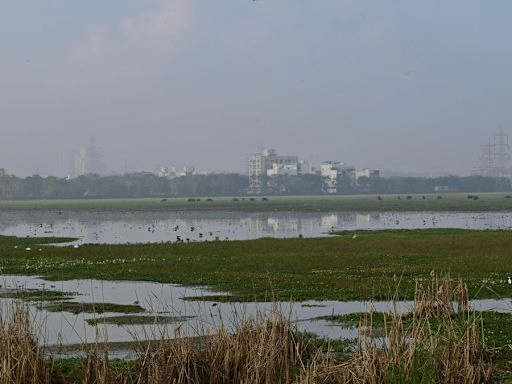
From Tamil Nadu’s tank systems and Kerala’s kenis to Andhra Pradesh’s fishing wetlands, India’s wetlands have historically functioned as integrated socio-ecological systems — supporting agriculture, fisheries, water security, and cultural life. Yet, despite their importance, wetlands today rank among the most threatened ecosystems in the country.
Policy background and challenges
India does not suffer from a lack of laws but from weak implementation.
- The Wetlands (Conservation and Management) Rules, 2017 provide a framework for identification, notification, and management.
- The National Plan for Conservation of Aquatic Ecosystems (NPCA) emphasises structured planning, monitoring, and outcome-based management.
- CRZ regulations aim to protect coastal wetlands, while Ramsar designation provides international recognition.
Despite this, nearly 40% of India’s wetlands have disappeared in the last three decades, and about half of the remaining wetlands show signs of degradation. Fragmented governance, inconsistent mapping, poor enforcement, and limited institutional capacity have undermined conservation outcomes.
Ecological degradation and hydrological disruption
Wetlands function through the timing, flow, and storage of water, making them highly sensitive to hydrological disruption.
- Catchments are altered by dams, embankments, roads, and real estate development.
- Channelisation, sand mining, and groundwater over-extraction disturb natural water regimes.
- Urban wetlands, often treated as vacant land, are forced to absorb sewage, stormwater runoff, and solid waste without legal buffers.
Pollution-driven eutrophication collapses biodiversity and erodes the wetland’s ability to buffer floods, recharge aquifers, and purify water. Coastal and riparian wetlands face compounded risks from sea-level rise, cyclones, ports, aquaculture, and tourism, leaving little room for ecological recovery.
Capacity and governance deficits
A major constraint lies in institutional weakness:
- State wetland authorities are often understaffed and underfunded.
- Skills gaps exist in hydrology, restoration ecology, GIS, legal enforcement, and community engagement.
- Management plans remain poorly implemented, with weak monitoring and accountability.
As a result, wetlands continue to degrade even where legal protection exists.
Pragmatic and contextual approaches
There is an urgent need to move:
- From isolated projects to integrated programmes
- From beautification to ecological functionality
- From departmental silos to watershed-scale governance
Key starting points include:
- Clear notification and demarcation
Conservation rules are only as strong as their notification. Publicly accessible maps, participatory ground-truthing, and grievance redress mechanisms are essential. - Treat wastewater before it reaches wetlands
Wetlands cannot substitute for sewage treatment plants. Where feasible, constructed wetlands should complement — not replace — primary treatment. - Protect catchments and hydrological connectivity
Wetlands must be managed as part of basin systems. Restoring feeder channels, preventing blockages, regulating extraction, and stopping waste dumping are critical. - Integrate wetlands into disaster risk reduction
Mangroves, floodplains, and urban wetlands should be treated as nature-based infrastructure, with investment comparable to grey infrastructure. - Build skills and institutions
A national capacity mission is needed to train wetland managers. NPCA funding must be paired with measurable outcomes and livelihood benefits for local communities.
Technology and knowledge integration
Recent advances offer new opportunities:
- Satellite remote sensing, drones, and time-series analytics enable real-time monitoring of encroachment, inundation, and vegetation change.
- Updated NPCA guidelines support science-based and monitorable management plans.
- Ramsar principles can be aligned with India’s context through community stewardship.
Crucially, traditional ecological knowledge, highlighted by the 2026 World Wetlands Day theme, can strengthen restoration and compliance when treated as evidence rather than anecdote.
Aligning science, policy, and society
Wetlands must be recognised as national public goods, not wastelands.
- Governments must notify, fund, enforce, and coordinate.
- Cities must stop using wetlands as sinks for waste.
- Industry must prevent pollution at source.
- Academic institutions must train the next generation of wetland professionals.
- Citizens must defend local lakes, ponds, floodplains, mangroves, and springs as shared heritage.
Conclusion
World Wetlands Day 2026 is not merely commemorative; it is a call for a societal pact. If science and policy are aligned — drawing strength from both modern tools and traditional wisdom — wetlands can be restored as living, working ecosystems rather than museum pieces.
India’s water security, climate resilience, and ecological future depend on treating wetlands not as expendable land parcels but as indispensable public goods.