


The Hindu Editorial Analysis
09 May 2026
A watershed moment in India’s defence posture
(Source – The Hindu, International Edition – Page No. – 8)
Topic : GS Paper: GS-3 (Internal Security, Defence, Security Challenges)
Context
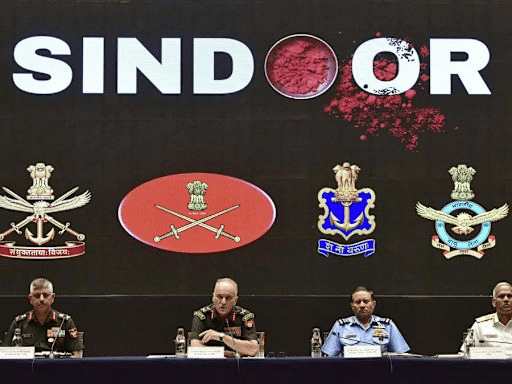
The editorial analyses Operation Sindoor, launched by India in May 2025 in response to the Pahalgam terror attack. It argues that the operation represents a major shift in India’s politico-military doctrine, signalling a transition from strategic restraint to a more assertive and integrated national security posture.
Core Issue
The central issue is the transformation of India’s defence doctrine in dealing with cross-border terrorism, marked by:
- Shift from reactive restraint to proactive response
- Integration of military and political decision-making
- Demonstration of calibrated escalation under a nuclear backdrop
This raises a key question:
Does Operation Sindoor mark the emergence of a new Indian security doctrine based on deterrence through decisive retaliation?
Shift from “Reactive Restraint” to “Zero Tolerance”
Earlier approach:
- Emphasis on restraint and diplomatic engagement
- Fear of escalation with a nuclear-armed neighbour
- Preference for “dossier diplomacy”
Post-Operation Sindoor:
- Cross-border terrorism treated as an “act of war”
- Clear political mandate for military response
- Refusal to accept nuclear blackmail
Implication:
- India has redrawn its strategic red lines
Integrated Tri-Service Operations
- Coordinated action by:
- Indian Air Force
- Indian Army
- Indian Navy
- Precision strikes on multiple terrorist targets
Significance:
- Demonstrates enhanced jointness and operational integration
Military Effectiveness and Escalation Control
- High-value Pakistani targets neutralised
- Real-time counter-response to Pakistani actions
- Use of advanced air defence systems including S-400
Observation:
- India combined offensive capability with controlled escalation
Strategic Signalling
Messages conveyed through the operation:
- Terror infrastructure will face direct retaliation
- Pakistan cannot hide behind nuclear deterrence
- India is prepared for rapid and calibrated military action
Global implication:
- International community witnessed India’s capability for limited but decisive operations
Political-Military Synergy
- Strong coordination between civilian leadership and armed forces
- Swift execution after political approval
Key insight:
- National security decisions increasingly reflect integrated strategic planning
Psychological and Geopolitical Impact
- Altered perception of India’s deterrence credibility
- Increased pressure on Pakistan’s military establishment
- Emergence of a “new normal” in India’s response strategy
Observation:
- Operation intended not only for military success but also strategic messaging
Implications for Defence Preparedness
Need for:
- Sustained operational readiness
- Faster indigenous defence production
- Integration of AI, cyber, aerospace, and advanced technologies
Focus area:
- Atmanirbhar Bharat in defence manufacturing
Role of Indigenous Defence Ecosystem
- Importance of DRDO, DPSUs, startups, MSMEs, and private sector
- Need for whole-of-nation approach to defence innovation
Implication:
- Long-term deterrence depends on technological self-reliance
Challenges and Risks
- Managing escalation under nuclear conditions
- Possibility of prolonged confrontation
- Diplomatic and economic repercussions
Concern:
- Balancing deterrence with regional stability
Way Forward
- Institutionalise integrated theatre-level coordination
- Accelerate defence modernisation and indigenous production
- Strengthen intelligence and surveillance capabilities
- Maintain calibrated and legally defensible response mechanisms
- Combine military deterrence with diplomatic engagement
Conclusion
Operation Sindoor represents a significant evolution in India’s national security doctrine.
By combining military precision, political resolve, and strategic signalling, India has projected a more assertive defence posture against cross-border terrorism.
The long-term success of this approach will depend on sustaining deterrence, strengthening indigenous capabilities, and balancing firmness with strategic stability.