


The Hindu Editorial Analysis
01 May 2026
India’s sprint beyond the dairy red line to the Pacific
(Source – The Hindu, International Edition – Page No. – 8)
Topic : GS Paper: GS-2 (International Relations) and GS-3 (Energy Security, Global Economy)
Context
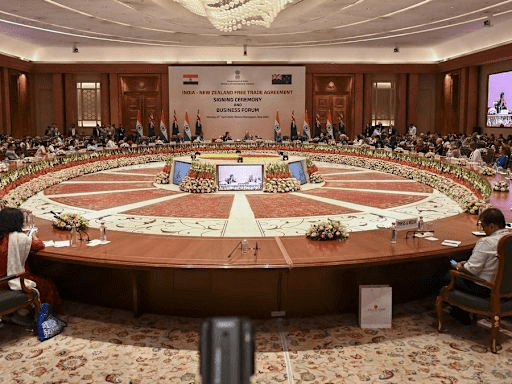
The editorial discusses India’s Free Trade Agreement (FTA) with New Zealand (December 2025), highlighting a shift in India’s trade policy toward faster negotiations, strategic partnerships, and deeper integration with global supply chains. It reflects India’s evolving approach under the vision of Viksit Bharat.
Core Issue
The central issue is India’s transition from a cautious trade approach to a proactive and strategic trade policy, involving:
- Faster execution of FTAs
- Balancing domestic protection with global integration
- Expanding geopolitical and economic influence
This raises a key question:
Can India effectively leverage FTAs to enhance economic growth while safeguarding sensitive sectors?
India’s Rapid FTA Execution
- Negotiations completed within a short timeframe (March–December 2025)
- Signals improved institutional efficiency and negotiation capacity
- Provides first-mover advantage in Oceania
Implication:
- India is emerging as a more agile and credible trade partner
Key Gains from the FTA
- Talent mobility
- Visa pathways for skilled professionals (IT, healthcare, engineering)
- Work-and-holiday visas for youth
- Recognition of traditional systems
- International recognition of AYUSH systems
- Cultural and knowledge exchange with Māori practices
- Investment flows
- Commitment of around $20 billion over 15 years
- Focus on sectors like renewable energy, agri-tech, and education
Outcome:
- Boost to Make in India and technology transfer
Protection of Sensitive Sectors
- Dairy sector safeguarded from full market opening
- Exclusion of key dairy products from tariff concessions
- Gradual and selective access for high-value dairy imports
Mechanism:
- Tariff rate quotas and phased liberalisation
Significance:
- Balances domestic interests with trade liberalisation
Trade and Manufacturing Benefits
- Duty-free imports for processing and re-export
- Focus on value addition through manufacturing
- Integration into global value chains
Implication:
- Enhances competitiveness of Indian industries
Geographical Indications (GI) Advantage
- Legal protection for Indian GI products in New Zealand
- Products like Darjeeling tea and Basmati rice gain recognition
Outcome:
- Strengthening of India’s branding and export potential
Strategic and Geopolitical Significance
- Establishes India’s presence in the South Pacific region
- New Zealand acts as a gateway to Oceania markets
- Aligns with broader Indo-Pacific strategy
Observation:
- Trade agreements are increasingly tools of geopolitical influence
Regulatory and Standards Alignment
- Adoption of global standards (including OECD benchmarks)
- Improves India’s credibility in international trade negotiations
Result:
- Sets precedent for future FTAs
Way Forward
- Ensure effective implementation of FTA provisions
- Support domestic industries to remain competitive
- Expand similar agreements with other regions
- Strengthen trade infrastructure and logistics
- Maintain balance between liberalisation and protection
Conclusion
The India–New Zealand FTA marks a significant evolution in India’s trade diplomacy, combining speed, strategy, and balance.
By protecting key sectors while expanding global engagement, India demonstrates a pragmatic approach to globalisation.
Sustained success will depend on implementation, competitiveness, and alignment with long-term economic goals.