


The Hindu Editorial Analysis
15 April 2026
Mapping the legislative vacuum in India’s heat crisis
(Source – The Hindu, International Edition, Page no.-8 )
Topic : GS Paper: GS-2 (Governance, Social Justice, Welfare of Vulnerable Sections) and GS-3 (Environment, Disaster Management, Climate Change)
Context
The editorial highlights the growing crisis of extreme heat in India, which has evolved from a seasonal phenomenon into a systemic national challenge. It focuses on the absence of a comprehensive legal and policy framework to address the disproportionate impact of heatwaves on vulnerable populations, particularly informal workers.
Core Issue
The central issue is the legislative and policy vacuum in addressing heat-related risks, leading to:
- Inadequate protection for vulnerable workers
- Lack of enforceable heat safety standards
- Insufficient disaster and fiscal response mechanisms
This raises a key question:
How can India develop a rights-based, enforceable framework to tackle the increasing threat of extreme heat?
Heat as a Structural and Social Crisis
- Heatwaves are no longer confined to specific regions; they now affect large parts of India
- Over 50% of districts are classified as heat-prone
- Impact varies across social groups:
- Affluent populations manage heat through private cooling
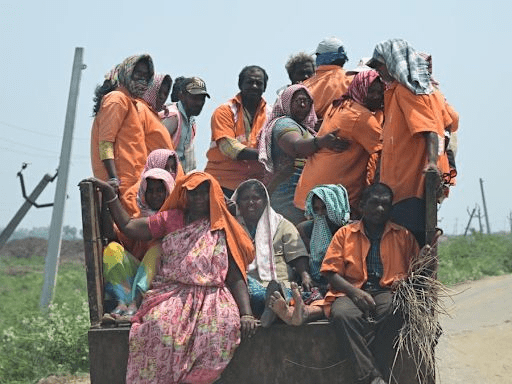
- Informal workers face direct exposure
Concept:
- “Thermal injustice” — unequal burden of heat based on class, caste, and occupation
Vulnerability of Informal Workers
- Construction workers, street vendors, sanitation workers, and gig workers are most affected
- Lack of “cooling autonomy” and workplace protections
- Even small temperature increases lead to:
- Reduced productivity
- Loss of income
- Health risks
Examples:
- Waste workers exposed to toxic heat conditions
- Gig workers facing algorithm-driven pressure without rest
Evidence from Ground Realities
- Reports of physical injuries such as burns due to extreme heat
- Higher localized temperatures in urban micro-environments
- Income losses due to reduced working hours
Implication:
- Heat is both a health crisis and a livelihood crisis
Legal and Institutional Gaps
- Factories Act, 1948 covers only indoor workplaces
- Occupational Safety, Health and Working Conditions (OSHWC) Code, 2020:
- Does not adequately address outdoor heat exposure
- Provides discretionary powers without mandatory standards
- Heatwaves not included in the National Disaster list
Result:
- No enforceable minimum safety standards
- Limited access to disaster relief funds
Fiscal Constraints
- States face the “10% SDRF cap” limitation
- Heat-related relief receives minimal funding
- Absence of dedicated financial mechanisms
Implication:
- Inadequate preparedness and response capacity
Addressing Thermal Injustice
The editorial calls for a rights-based framework:
- Recognition of heat as a public and occupational hazard
- Transition from advisory-based approach to enforceable mandates
- Integration of climate adaptation with labour rights
Key Policy Recommendations
Legal reforms:
- Include heatwaves in the National Disaster list
- Notify binding heat safety standards under OSHWC Code
Administrative measures:
- Convert heat alerts into enforceable local action plans
- Adopt Heat Index (temperature + humidity) as the trigger metric
Worker protection:
- Mandatory work-rest cycles
- Provision of protective equipment and hydration
- Cooling shelters and public water facilities
For gig economy:
- Restrict algorithmic penalties during extreme heat
- Extend labour protections to platform workers
Financial measures:
- Compensation for income loss during heat events
- Explore innovative insurance models (e.g., parametric heat insurance)
Role of Judiciary and Rights Perspective
- Supreme Court (Ranijit Singh case, 2024) recognised “Right to Cool” under Article 21
- Strengthens the argument for heat protection as a fundamental right
Implication:
- Heat governance must be embedded within constitutional justice
Way Forward
- Build a comprehensive national heat action law
- Strengthen coordination between IMD, Labour Ministry, and local bodies
- Ensure inclusion of informal workers in policy design
- Align climate adaptation with social protection frameworks
- Move from reactive disaster response to proactive risk governance
Conclusion
India’s heat crisis is not merely an environmental issue but a question of social justice and governance.
The absence of a robust legal framework exacerbates vulnerability and deepens inequality.
Addressing thermal injustice requires a shift toward enforceable rights, institutional accountability, and inclusive climate governance.